Home Blog Page 21

South African architect reinvents Serpentine Pavilion in London

0

Matthew Barac, London Metropolitan University

The arrival in London of a new Serpentine Pavilion is a design diary highlight every year.

Each commission sees a new temporary garden building – a pavilion – created by a selected international architect. It is organised by the Serpentine Galleries in Kensington Gardens, Hyde Park, regularly attracting over 1.2 million visitors a year.

In 2020 the prestigious Serpentine Pavilion was awarded to South African studio Counterspace. Soon afterwards, the organisers decided to delay and extend the commission over two years because of the COVID-19 pandemic. Now, finally, it is about to emerge into public life.

News of the choice of Counterspace was greeted with enthusiasm. The three women who set up the interdisciplinary Johannesburg practice are the youngest architects to land the Pavilion commission in its 20-year history. Past designers include architectural superstars such as Frank Gehry, Daniel Libeskind and Peter Zumthor.

The Serpentine Pavilion, a free-to-access destination and venue for cultural gatherings, has been seen as a vehicle for innovation. But detractors argue it has become a platform to celebrate “starchitects” and host paparazzi-friendly parties.

Recent attempts to diversify the message by selecting “up and coming” designers have met with mixed reviews, but the choice of Counterspace ups the ante. Here’s why.

Diverse alternatives

The pavilion is designed by Sumayya Vally, the Counterspace director. She is not the first female appointee. Celebrated British-Iraqi architect Zaha Hadid designed the inaugural pavilion, and women followed in 2009, 2015 and 2018. But Counterspace represents a new, forward-looking and timely attitude to inclusion, diversity and creativity.

Responding to the news, Lesley Lokko, African Futures Institute director and RIBA Annie Spink Award laureate, said:

As the world grapples with issues of race, identity and inequity in the built environment, this is an opportunity for a young African practice to show that the imagination is the most powerful tool for change.

Named for its belief that “every space has an equal and opposite counter-space”, Counterspace operates as a collaborative studio in which a culture of questioning is fundamental.

Who is Counterspace?

Founding principal Vally and her partners Sarah de Villiers and Amina Kaskar established the firm in their twenties. They want to change architectural knowledge just as much as they want to make buildings. All three teach while practising professionally.
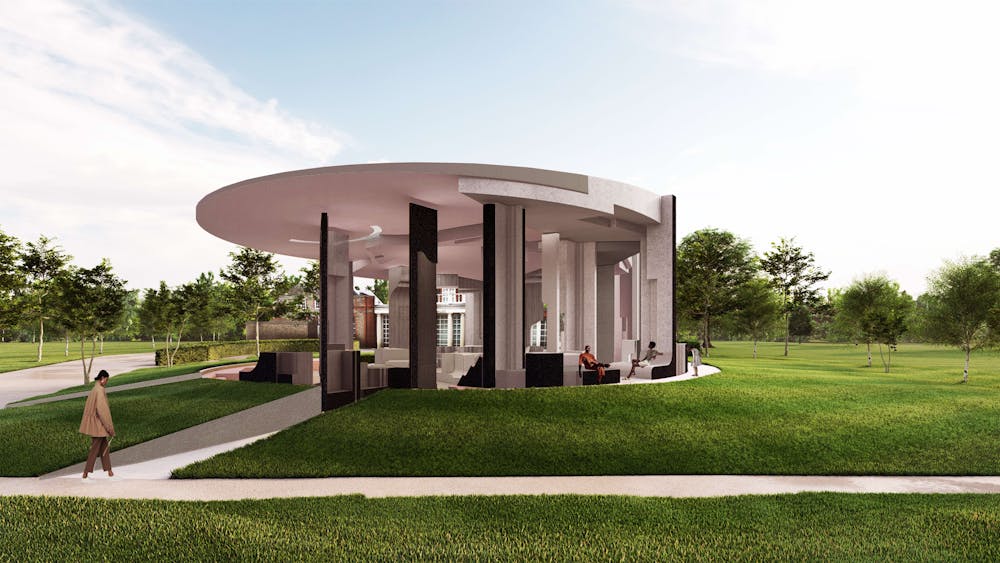
An illustration of  woman walking towards a structure in the middle of a park, with people sitting inside it. The structure has no walls and a round roof held up by a variety of angular, modern columns.
The winning design for the new Serpentine Pavilion. Image courtesy Counterspace

Projects in the Counterspace portfolio include performances, installations, choreography and curating, as well as research investigations and building designs. Works include Folded Skies, a large-scale mirror sculpture in Cape Town, and the Brixton Mosque in Johannesburg, a scheme to wrap an existing church reused as a mosque in a new envelope that speaks the architectural language of Islamic geometry.

By contrast with the object-oriented architecture of most pavilions to date, Counterspace emphasises process. It wants to steer and gather the Serpentine Pavilion into being over time.

Time and the city

The act of building will extend beyond the opening date, spreading across the summer months. So the pavilion you see in June may change by the time you return for a second look in September.

This aligns with the Serpentine Gallery’s view too. According to artistic director Hans Ulrich Obrist, the silver lining of the pandemic is an “opportunity to take more time”. A range of events and research activities have been initiated, reframing the official opening date as a milestone on the Pavilion’s journey, rather than its destination.

Eminent architect David Adjaye counselled the pavilion’s trustees to

Accept the slowness reshaping society today and utilise it to develop a deeper relationship with the architects.

The Counterspace ethos will allow the pavilion to accommodate difference, even conflict. Vally, the only architect on the 2021 Time100 Next list, recently told me of her aspiration to deliver a space meaningful to Londoners near and far. It should reach out to those at the periphery, and reach in to the city centre.

The pavilion

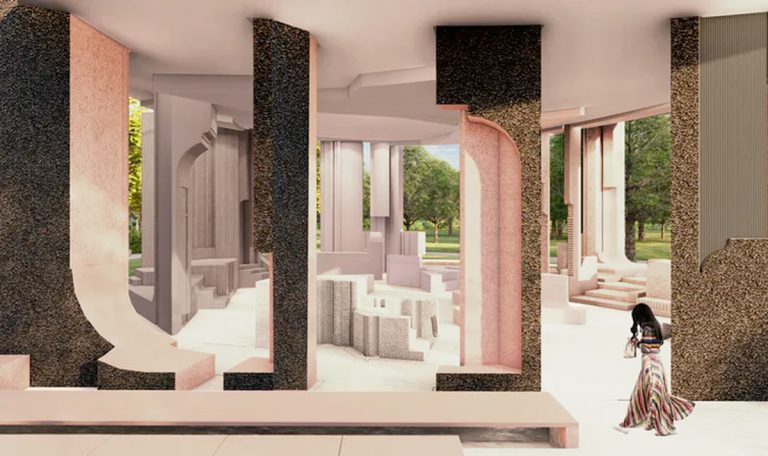
A lofty circular roof defines the extent of the pavilion. It is both cosmological – a canopy of stars – and childlike in its symbolism of centrality, reminding us of the circle of play we make by joining hands.

Rising columns and wall fragments echo other histories, borrowing bits of the city and bringing them together in a bricolage of recombined and recycled fragments. Connections to other buildings, moments and places across London are suggested.

Sumayya Vally in conversation with Hans Ulrich Obrist 19.5.20 from Serpentine Galleries on Vimeo.

This architecture of visual quotations recalls the postmodern theories of Robert Venturi and Denise Scott Brown. The approach superimposes memories represented by design motifs. A cut and paste detail from a Notting Hill Caribbean café that was a hub for anti-racist activists in the 1960s might appear on the pavilion alongside an element drawn from the South London offices of the West Indian Gazette, a major Black newspaper founded by activist Claudia Jones in 1958.

This accumulation of elements and influences is filtered through Vally’s artistic processes of interpretation:

Any work that I do is about how I am shaped by the people that I work with, about ingesting as much as I can from a place and its people and then translating that into form.

Architecture of invitation

To date, the Serpentine Pavilion has provided a passive setting for people to meet. But Counterspace aims to actively engage with communities and sites of marginalised history across London – to draw people in.

This is an architecture of invitation. The design does not attempt to deliver insights but rather foster understanding, absorbing conflict by providing a context for bringing differences together.

It captures something of an emergent creative spirit – influenced but not defined by wokeness and related cultural controversies – in which the space to be flawed and unsure, to be real, is claimed as a stage for belonging.

This approach, which resonates with Robert McCarter’s reformulation of “place-making as resistance”, reminds us of the need to reclaim our capacity for human relationships. The pavilion invites us to rediscover public life and meet again, after our long confinement, in a space made for us and with us.

The 2021 Serpentine Pavilion opens on 11 June in London


This article was updated on 8 June 2021 to reflect that Vally was now the lead designer on the project.

Matthew Barac, Reader in Architecture, London Metropolitan University

This article is republished from The Conversation under a Creative Commons license. Read the original article.
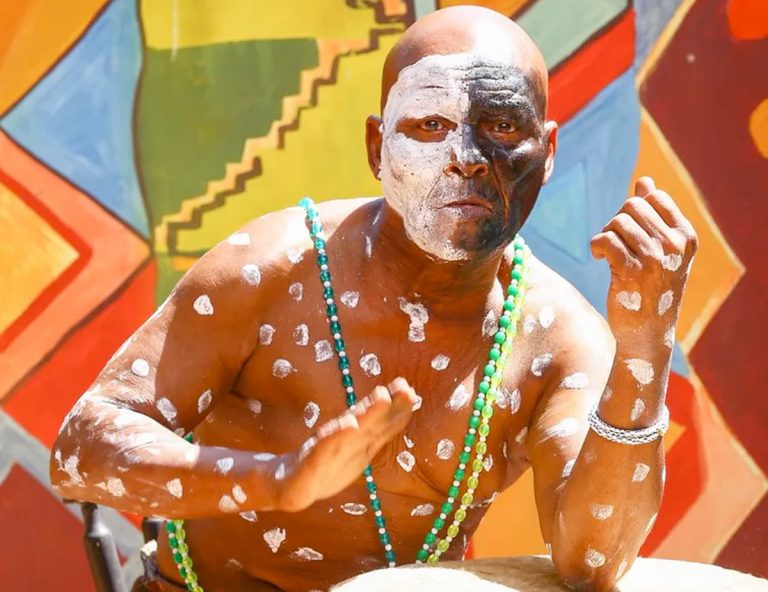
The magnificent Mabi Thobejane, master South African drummer

0

David Coplan, University of the Witwatersrand

Winter chokes the highveld in Johannesburg, South Africa, and takes from me, from our entire culture, a mighty mountain. Gabriel Mabi Segwagwa Thobejane, the diminutive tower of rhythmic power, has left us: a man who did not so much play the drums, but became The Drum.

He reportedly suffered a stroke at the age of 74 and passed on 3 June 2021.

Even though he was both master and a creator of South Africa’s indigenous sonic archive, Mabi, as we all came to call him, was also a showman and a collaborator. He could and would play in support of almost anyone, from jazz musicians to poets to mainstream artists. He was artistically intimidated by nothing and no one.

The young Gabriel

Mabi was raised in the township of Mamelodi near the capital city Pretoria, where he absorbed the rural, neo-traditional, urban folk and Sepedi jive drum and dance-song forms that commingled in the streets and backyards.

The young Gabriel had no calling to blow his horn in a church and defied his mother who insisted he become a priest. Her tendency to break up his makeshift drum kits led him to hang about the tanneries and artisanal workshops, collecting materials he fashioned into high-quality hand and mallet drums for which he later became so famous. From early on, Mabi pursued whatever “arrested” (bopha!) him full force without equivocation or compromise. And he was to serve a life sentence in the total reinvention of the highveld’s African percussion.

This single-minded pursuit of a fading musical patrimony from the ancestors ran in the family. Gabriel’s uncle Philip Thabane was already doing so on the electric guitar, forming the Malombo Jazzmen with flautist Abbey Cindi and afro-percussionist Julian Bahula in the 1960s. https://www.youtube.com/embed/fdV39OJuTS8?wmode=transparent&start=0 Mabi Thobejane in 1995 in Johannesburg, assembled by Forest Jam Southern Africa.

Philip’s uncompromising indigenous originality led to a break-up. Before the end of the decade Abbey, Julian, guitarist Lucky Ranku and mbaqanga vocalist Hilda Tloubatla had reformed as the Malombo Jazz Makers. For Philip, only one young performer made the grade: Gabriel Thobejane. They went on to gain local success and world fame as the duo Malombo.

The power of Malombo

Given the extent of his contribution and influence, there is pitifully little written about my former bandmate Mabi. In my book In Township Tonight! South Africa’s Black City Music and Theatre I wrote about Malombo:

This duo revolutionised progressive indigenous music in South Africa from 1965 to 1977. Their first recording appeared in 1968, and in 1971, Philip and Gabriel travelled to the United States where they appeared at clubs and concerts around the country for two years, playing with Miles Davis, Max Roach, Pharoah Sanders, McCoy Tyner, and other first rank jazz musicians … In 1973 (they) returned home to perform for and learn from their own people in the Transvaal townships.

Malombo’s 1976 album Pele Pele and their 1977 appearance at the New York Newport Jazz Festival continued to build their international reputation. Their recordings, I wrote in the book, could not hope to capture the electricity and spellbinding virtuosity of their live performances. I had the privilege of performing with Malombo as a percussionist at many of their South African appearances at the time. I wrote:

Philip and Gabriel kept up a constant, almost competitive musical dialogue on guitar, kalimba (hand piano), flute, pennywhistle and drums. The intensity of Philip’s guitar solos and melodic poetic recitation, and Gabriel’s percussive power and dynamics with drums, dance, and ankle rattles kept black and white concertgoers alike jumping and shouting on the edges of their seats. Truly innovative creative departures in black South African music tend to create their own trends and offshoots, and this was certainly true of Malombo.

Mainstream bands such as Sipho Mabuse’s Harari and later Ray Phiri’s Stimela were influenced by Malombo. As were the “alternative” black consciousness ensembles that often included spoken and sung poetry that appeared in the late 1970s, such as Dashiki, led by the soon-to-be-exiled poet and artist Lefifi Tladi, Thabang Masemola’s Batsumi, and the Malopoets, precursors of rappers like Prophets of Da City.

A musical comrade

In some ways Mabi Thobejane’s great initial achievement was his ability to partner with the introverted, crusty Philip Thabane for so long. Quite the opposite, Mabi was unsurpassed as a joyful jester and musical comrade. He loved and accepted his unpredictable fellow musos. I witnessed many a musical showdown between Thabane and Thobejane on stage. After a difficult return tour to the US in 1977, they went their separate ways.

The author (left) performing with Malombo. Courtesy David Coplan

By the 1990s Mabi had started to find an outlet for the sounds that had stayed with him from the Bronx. He continued being involved in some of the most exciting collaborations – with bassist Sipho Gumede and saxophonist Khaya Mahlangu, guitar master Madala Kunene, percussionists Amampondo. For a decade he toured and haunted the electronic, eclectic studio sessions with UK act Juno Reactor, who released the legendary acoustic/electronic percussive remixes of Conga Fury.

Artist and showman

Mabi was as much a showman and a performance event as he was a musician. He not only built his own drums, but created his own costumes of beads, antelope and cattle hides and distinctive body paint. Characteristically he would perform stripped to the waist, his face painted half chalk white and half charcoal black, his compact brown torso covered in white spots like a reverse-image leopard. His intention was to conquer his musical world as a drum guerrilla representing himself and his deeper Tshwane origins, without hybridity, without borrowing. And in that guise, what a lender and a collaborator he turned out to be.

As a proper morena oa lefatse (king of the earth), Gabriel Mabi Thobejane revealed the inner character of the people of the land in both musical expression and force of personality. He entered so many of our lives in unique modalities that enriched our worlds forever. I cannot do better, before returning to shocked silence at his passing, than to share a new poem by the musical commentator and scholar Sam Mathe. In For Gabriel Mabi Segwagwa Thobejane Mathe refers to Mabi as segwagwa, the frog, the creature he physically resembled that became Philip Thabane’s musical praise name for him:

Segwagwa
The bullfrog that croaks in the streams
and lagoons inhabited by ancestral spirits
the elusive amphibian that greets springs
with the gravel voice and tone of a groaner
Segwagwa
The showman with deft magical hands
whose rumbles are like a distant thunder
The shaman who plays healing sounds
on baobab drums crafted by the gods
Segwagwa
In the south the cold season is upon us
the rains are gone, rivers have dried up
it is time for you to go into hibernation
farewell grandmaster of the percussion
Till we meet again when the rainclouds gather

David Coplan, Professor Emeritus, Social Anthropology, University of the Witwatersrand

This article is republished from The Conversation under a Creative Commons license. Read the original article.

This trait could be key to a lasting romance

‘I’m not perfect – and I know you aren’t, either.’ Pixabay

Toni Antonucci, University of Michigan; Kristine J. Ajrouch, University of Michigan, and Noah J. Webster, University of Michigan

Passion and commitment are widely believed to be the foundation of strong romantic relationships.

But a relationship is made of two unique individuals, and personality traits these individuals possess or lack can often make a relationship more likely to endure.

In a 2019 study, we found that one trait in particular – humility – is an important indicator of successful relationships.

An honest view of shortcomings

Humility can sometimes be confused with low self-esteem, low confidence or meekness.

But researchers have come to realize that being humble generally indicates the presence of deeply admirable personal qualities. It means you have the ability to accurately assess your deficiencies without denying your skills and strengths.

For example, you might recognize that you’re smart but realize it would be absurd to call yourself all-knowing – especially when the scope of human knowledge is so vast. This is an honest and sober view of your shortcomings.

As the philosopher Jason Baehr has argued, “To be humble is to be attentive to and disposed to ‘own’ one’s limitations, weaknesses, and mistakes. A humble person does not ignore, avoid, or try to deny her limits or deficiencies.”

If you’re humble, you lack a host of negative qualities, such as arrogance and overconfidence. It means you can acknowledge mistakes, see value in things that are riddled with imperfections and identify areas for improvement.

The link between humility and forgiveness

Humility appears to be a huge asset to relationships. One study found that people tend to rate this quality highly in their significant other. It also found that someone who is humble is more likely to initiate a romantic relationship, perhaps because they’re less likely to see themselves as “too good” for someone else.

But in our study, we wanted to explore the link between humility and forgiveness in couples.

Humility is tricky to measure; we worried that people who were arrogant might presumptuously declare their humility, while people who were actually humble would, as a sign of their humility, downplay this trait.

So we approached this question by asking each partner in a romantic relationship about their own and their partner’s humility. We hoped that even if a truly humble person didn’t consider themselves humble, at least their partner would recognize this trait.

We asked 284 couples from the Detroit metropolitan area questions about how humble they were, how humble they thought their partner was and if they were likely to forgive their partner if they did something that was hurtful, like insulting them.

We found that people who felt their partner or spouse was humble were more likely to forgive them following a hurtful situation. This wasn’t true, however, of those who felt their partner or spouse was arrogant. Many of our respondents with arrogant partners indicated that because their partners were less likely to admit to any personal failings, they were less likely forgive them.

Interestingly, the strength of an individual’s social network can play a role too. If someone has a humble partner, they’re more likely to forgive that person. If someone has a lot of close, supportive friends and a humble partner, they’ll be even more likely to forgive that partner after he or she has screwed up. But if your partner is arrogant, it doesn’t matter how many great friends the couple has, they’ll still be less likely to be forgiven.

The ability to forgive is so important because pain is an inevitable part of any relationship. People mess up. They might say something they don’t mean, be unknowingly inconsiderate or forget an important event. So when looking for a partner, it’s probably a good idea to find someone who recognizes that making mistakes is part of being human.

Toni Antonucci, Elizabeth M. Douvan Collegiate Professor of Psychology, University of Michigan; Kristine J. Ajrouch, Adjunct Research Professor, Survey Research Center, Institute for Social Research, University of Michigan, and Noah J. Webster, Assistant Research Scientist, Survey Research Center, Institute for Social Research, University of Michigan

This article is republished from The Conversation under a Creative Commons license. Read the original article.

Watch | Ndlovu Youth Choir’s version of Shallow

0

The ever-popular Ndlovu Youth Choir has hit the mark again with their rendition of Lady Gaga and Bradley Cooper’s Shallow, the theme song of the movie A star is born.

Filmed in Cape Town and Bloubergstrand with Table Mountain as a backdrop the song was translated into Xhosa with a South African twist.

Music video by Ndlovu Youth Choir performing Shallow. (C) 2021 Simco Limited under exclusive license to Sony Music Entertainment Africa (Pty) Ltd

Find out more at: https://bit.ly/3xJlZ49

Follow South Africans UK on Facebook and Instagram.

Join the South African UK map and subscribe to our newsletter.

South African Outdoor Market at Rother Valley

Rother Valley Farm All Out African food events are back this summer!

This year promises to be bigger and better with more amazing South African food, drink, stands and more.

Friday 16th July 2021, 9 am – 3 pm
Saturday 17th July 2021, 9 am – 3 pm
Sunday 18th July 2021, 9 am – 3 pm

Visit this rustic farmyard and sample a selection of South African delights including boerewors rolls, bunny chow, potjie, dry wors, biltong, melktert, koeksister and lots more South African favourites. You may want to pre-order your melktert as they were sold out last year.

You’ll also be able to buy Winkhoek and Castle later along with other South African drinks and you may even find a few gem squash here too.

Join the events on Facebook to keep up to date: www.facebook.com/RotherValleyFarm/events/

Find out more at: https://bit.ly/3xJlZ49

Follow South Africans UK on Facebook and Instagram.

Join the South African UK map and subscribe to our newsletter.

Happy Africa Day

0

Africa Day celebrates the foundation of the Organisation of African Unity on 25 May 1963.

On this day representatives from thirty African nations met in Addis Ababa where the Organisation of African Unity was founded to encourage the decolonisation of Angola, Mozambique, South Africa and Southern Rhodesia.

The organisation was transformed into the African Union on 9 July 2002 in Durban, South Africa, but the holiday continues to be celebrated on 25 May.

Themes are set for each year’s Africa Day, with 2015’s being the Year of Women’s Empowerment and Development towards Africa’s Agenda 2063 and this year, 2021 Arts, Culture And Heritage sets the tone.

Source: wikipedia.org/wiki/Africa_Day

How we proved a Rembrandt painting owned by the University of Pretoria was a fake

0

Gerard de Kamper, University of Pretoria and Isabelle McGinn, University of Pretoria

The paintings of Dutch master Rembrandt van Rijn are displayed in prestigious art galleries in capital cities around the world.

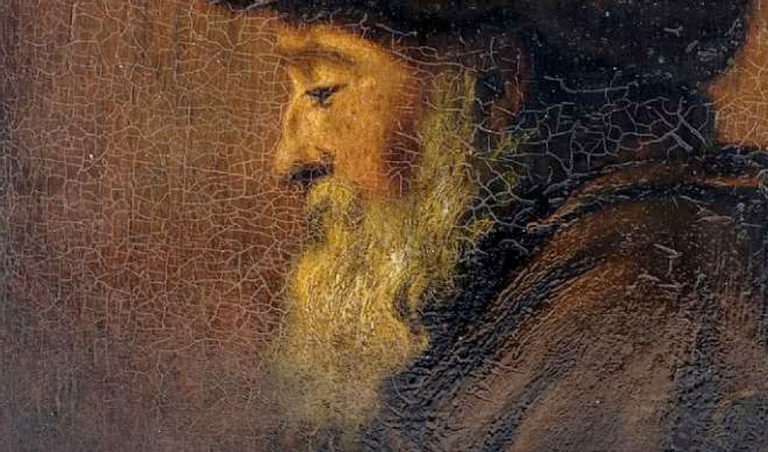
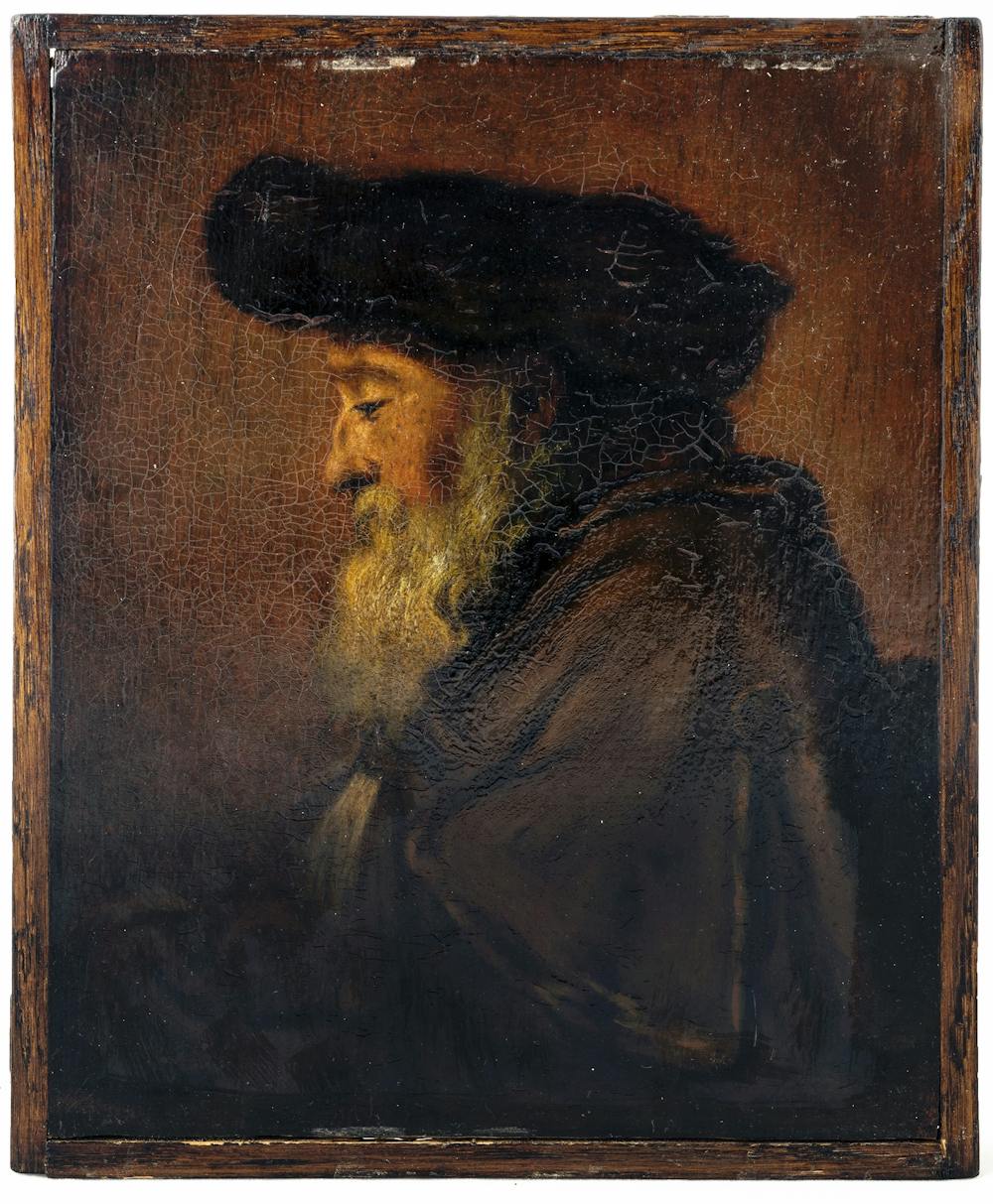
One – a small oil painting on a wood panel depicting the profile of an old man in a hat and cloak – made its way to South Africa in the late 1950s. It was part of an extensive collection belonging to a Dutch businessman, JA van Tilburg, who emigrated to the country. In 1976 the work was donated to the University of Pretoria.

For decades, the work was attributed to Rembrandt, the world famous artist from the Dutch Golden Age of painting (1588-1672). After all, it had a good provenance. Provenance is the study of the history of an object after its creation. Typically in the case of a painting it would be the history of the ownership of the artwork.

The painting was documented as being part of the Warneck Collection, an important private art collection in Paris, as described in the book by Cornelis Hofstede de Groot. But provenance research carried out in the Netherlands in 2015-2016 showed that the painting’s provenance to the Warneck Collection was in fact incorrect.

We work for University of Pretoria Museums and an academic unit called Tangible Heritage Conservation, the only one of its kind in sub-Saharan Africa. Here, over the last three years, we have developed analytical techniques to study the materiality of artworks and objects – all relevant information related to the work’s physical existence, including its history and conservation.

In an effort to get to the bottom of the origins of this particular Rembrandt we started to do provenance research and then started to learn the techniques used in studying the works of Rembrandt on a technical level. In a research paper we concluded that the work previously accepted as a Rembrandt was indeed not by the artist.

The search

We could trace the painting back through 14 buyers and sellers by researching auction catalogues at the RKD (Netherlands Institute for Art History). The painting could be tracked all the way to 1899, when it was described as “surely authentic” by De Groot.

The painted profile of an elder man with a long grey beard, hat and cloak.
Image: University of Pretoria Museums Source: UGC

Several factors made us believe the painting might be original. Distinctive marks on the back of the frame, mention of an invoice in Rembrandt’s handwriting accompanying the painting at the 1889 auction, as well as expert reviews suggested that it could indeed be a Rembrandt, or at least from his studio. (It was commonplace for a master to have apprentices work in his studio and on his paintings.) There were even references to chemical analyses of the painting in 1941 by one of the time’s most eminent and earliest technical art analysis scientists, AM de Wild.

But, to determine whether the painting was in fact by Rembrandt, provenance research was not enough. It needed to be complemented by an art historical connoisseurship, which looks at a stylistic review. Are things like the style, colours and composition of the painting typical of the artist’s work? It needed to be backed up by physical evidence through technical art analysis.

Technical art analysis is not widely available in South Africa and there were challenges in taking the painting to Europe to be authenticated. The solution was to start developing local expertise. This included learning to use and understand techniques such as X-ray fluorescence, ultraviolet light and infrared photography to inspect the painting.

Using cutting edge technology we searched for fresh evidence about the painting’s authenticity.

The evidence

Authentication requires multiple steps to ensure all aspects of the painting point to the creator of the work. Photographs taken under ultraviolet light investigated possible retouching and restoration. Infrared imaging techniques looked for any under-drawings or compositional changes. X-rays identified structural components of how the panel was secured in its cradle – and the presence of a lead-based underground to prepare the panel, as well as lead white in the paint.

The wood panel was examined using dendrochronology, a method to date wood down to the year that the tree was cut down, in this case in the 1640s. An analysis of the individual pigments in the painting was also done using a handheld X-ray fluorescence spectrometer.

All the results suggested that the correct elements were present in the painting, specifically lead, to place it in the 1600s, the time of Rembrandt.


Read more: There’s been a spike in fake African art. What’s being done to fight it


But then the opportunity arose to bring in an X-ray fluorescence scanner, which combines X-ray fluorescence sampling with scanning technology. This can help determine the elemental composition of materials. The scanner allowed us to map the entire surface of the artwork, instead of relying solely on a handful of small areas to identify and characterise certain pigments – as was done using the handheld spectrometer.

Now data could be analysed in layers, allowing for layers to be selected or removed from the digital map in order to look at the elemental distribution over the entire surface. A desktop scanner was sufficient in the case of this small painting but the technology is the same as that used at the Rijksmuseum in Amsterdam in their Rembrandt Operation Night Watch project.

Although the scanning picked up the same elements consistent with Rembrandt’s palette, these were in minimal quantities compared to what was expected and has been identified in other Rembrandt paintings around the world. Lead white should have been used in the preparatory ground layers and in the white paint, but only minimal quantities were present.

Zinc white was also present. This is problematic as it was only introduced as a pigment in 1834. In addition barium sulphate was found in large quantities. But mining of barium sulphate was only possible from the 1850s onwards.

The outcome

Thus, a creation date is only possible after 1850 when barium sulphate was introduced. This painting in the collection was thus made 200 years after Rembrandt. It remains unattributed.

Several collections in South Africa contain old master paintings like this one. The attribution and age of these works when donated or purchased are simply believed, due to the lack of expertise in art authentication and the cost of sending them to Europe to be authenticated. Proving that these works are not what they seem is likely to become more common.

Gerard de Kamper, Chief Curator Collections, lecturer, PhD candidate, University of Pretoria and Isabelle McGinn, Lecturer and conservator, University of Pretoria

This article is republished from The Conversation under a Creative Commons license. Read the original article.

SA Wine Quiz & Giveaway with RAKQ

How much do you know about South African wine? Put your knowledge to the test and enter a prize draw to win a case of premium South African wine with the fun new quiz from RAKQ Wines.

RAKQ is a new speciality retailer championing premium South African wine in the UK through its online shop, wine club and tasting events. It was founded in 2020 by Sebastian Rezek, an SA Expat and die-hard wine enthusiast, to support passionate South African winemakers impacted by the domestic bans on alcohol.

The Prize

Take the quiz and sign-up for the chance to win 6 bottles of premium South African wine worth £75 from Rustenberg Estate, Stellenbosch, considered one of the top five wine farms in South Africa.

Included in the case:

1x Rustenberg, Grenache 2018 – Light and juicy with red fruit flavours and a nice pepper spice.

1x Rustenberg, Merlot 2019 – Smooth, easy-drinking Merlot with aromas of blackberries, cassis, eucalyptus and dark chocolate.

1x Rustenberg, Shiraz 2017 – Expressive red berry fruit flavours combine with spice and cloves on the finish

1x Rustenberg, RM Nicholson 2018 – Savoury and full-bodied with blackcurrant aromas supported by notes of dried herbs and black pepper.

1x Rustenberg, Cabernet Sauvignon 2019 – Fruit-forward with dark berries and notes of tobacco. Well-structured with a lengthy finish.

1x Rustenberg, Malbec 2019 – An expressive and approachable Malbec with attractive dark fruit flavours and notes of pepper and tobacco.

The winner will be selected at random on Tue 25th May.

Click here to take the quiz!

Perfect Roast Chicken

This simple recipe is sure to guarantee you a perfectly roasted chicken with loads of flavour time after time.

Ingredients:

Serves 4

  • 1.5kg whole chicken
  • 1 lemon, cut in quarters
  • 4 garlic cloves
  • 4 sprigs of fresh rosemary
  • 60g butter
  • salt and pepper
  • 250ml chicken stock
  • 250ml water
  • 125ml white wine

Heat the oven to 250°c. Stuff the chicken with lemon, garlic, 2 sprigs of rosemary and the butter. Place the remaining rosemary into a roasting pan. Rub the chicken with salt and pepper to season and place on top of the rosemary in the pan.

Mix the chicken stock, wine and water and pour into the roasting pan. Roast the chicken for 1 hour or until cooked and crisp. During cooking, top up the liquid in the pan if necessary.

Serve with your favourite veggies or salads.

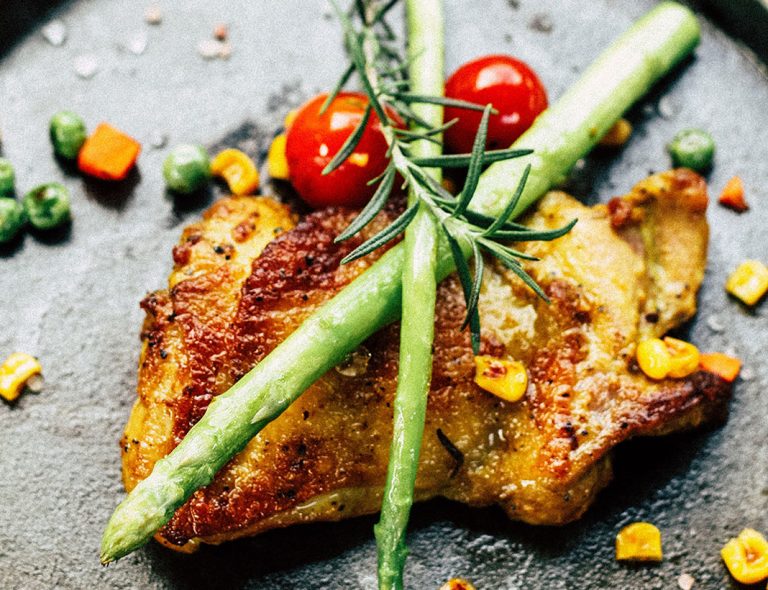
Photo by Mgg Vitchakorn on Unsplash

Can drinking red wine help you fight Covid?

Mien-Chie Hung, President of China Medical University, Taiwan, is currently involved in research that shows how tannins in red wine could help fight Covid.

It is scientifically known that tannic acid has the ability to inhibit Covid-19. The research originally started while researching tannins in tea.

After receiving a lot of attention from the positive results on tannin research in tea, Hung was contacted by various wine companies to look into the research on the tannins in red wine. He considers it a social responsibility to do so, the research is ongoing.

Hung states if two people are infected by the same amount of the virus and one drinks red wine and the other doesn’t, the one who drinks red wine would have higher protection against the virus than the one that did not drink red wine.

You would have to drink a lot of wine every day (around a litre of it) in order to gain any resistance so probably a bad idea to guzzle a litre of red wine just yet as not only will you be highly inebriated it may be damaging to your health.

Ironically Hung does not drink wine, his sister however owns Lichau Hill Vineyards on Sonoma Mountain.

Read more on the subject here.

Order your favourite South African wines online from www.capewineandfood.com

Find out more at: https://bit.ly/3xJlZ49

Follow South Africans UK on Facebook and Instagram.

Join the South African UK map and subscribe to our newsletter.