Home Blog Page 5

New discovery: fossilised giant zebra tracks found in South Africa

0

Charles Helm, Nelson Mandela University

Tens of thousands of years ago, a huge horse species walked, trotted and galloped across the shifting sands of what is today South Africa’s Cape south coast.

The Giant Cape Zebra (Equus capensis) weighed an estimated 450 kg. Its extant relatives in southern Africa are far smaller: the plains zebra weighs between 250 and 300 kg and the Cape mountain zebra is the smallest of all zebra species, with a mass of between 230 and 260 kg.

The Giant Cape Zebra became extinct just over 10,000 years ago. This may have been partly because of the loss of its preferred habitat of extensive grasslands, as rising sea levels flooded the vast Palaeo-Agulhas Plain. But until now it hasn’t been clear how common the species was on the Cape south coast because its body fossils are predominantly from southern Africa’s west coast.

That’s where ichnology – the study of tracks and traces – comes in. Since 2007 our team has documented more than 350 fossil vertebrate tracksites along a 350 km stretch of the Cape south coast.

Now, by studying the tracks left by those galloping, walking and trotting zebra so long ago, we’re able to say that they must have been a fairly regular sight on the landscape of the Cape south coast, and were more common than was suggested by the body fossil record in the area. This confirms the capacity of the body fossil record and ichnology to complement each other.

Being able to look back in time in this way doesn’t just help scientists to better understand ancient landscapes. It’s also an important part of understanding what’s changed over time and the effects of climate change and humans.

Zebra crossings

In our recently published article we described how we have identified 26 equid tracksites – including tracks belonging to Equus capensis – in aeolianites (cemented dunes) on South Africa’s Cape south coast in the vicinity of towns like Still Bay and Plettenberg Bay.

This is especially exciting because equid tracks dating to the Pleistocene epoch, which started 2.6 million years ago and ended about 11,700 years ago, are rare. In fact, our finds mean that the Cape south coast accounts for the majority of the sites known globally from this time period (other sites are in Kenya, Ethiopia, Italy, the Arabian Peninsula, and the Americas).

Thirteen of the tracksites we found contain tracks 12 cm or greater in length, and eight contain tracks 10 cm or less in length (in the remaining five cases we could not access the tracks for measurement). Well preserved equid tracks are fairly distinctive: features include an unbroken hoof wall and what is known as a “frog” towards the centre of the track.
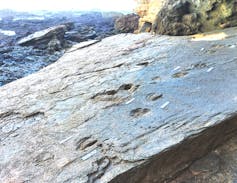
The site with the long Giant Cape Zebra trackway. Jan De Vynck

We were able to attribute the large tracks to Equus capensis, and the small tracks to the quagga (Equus quagga quagga), the plains zebra subspecies that became extinct in the 19th century.

One of the Giant Cape Zebra sites comprises a single trackway containing 12 tracks. Another contains two probable quagga trackways that intersect at right angles, respectively containing ten and six tracks. We informally dubbed this the “zebra crossing”. Such long fossil equid trackways are especially rare, as equids are often gregarious (resulting in trampled areas) and isolated trackways are unusual.

One other African example of a long equid trackway is from Laetoli in Tanzania from the older Pliocene Epoch. Sadly, the finest such site was in Nevada in the US, where a 50,000 year-old equid trackway contained 28 tracks – but it was covered in the 1930s during prison construction and is no longer accessible.

Through our Optically Stimulated Luminescence dating program, we have established an age range for the equid tracksites from about 161,000 years to about 43,000 years.

Looking back – and ahead

Identifying and reporting the tracks of the Giant Cape Zebra allows us not only to imagine its presence on the Cape south coast many thousands of years ago, but also reminds us of how extinction often follows in the wake of climate change. And it allows scientists like ourselves working in southern Africa to contribute substantially to a relatively sparse global record of such sites.

Charles Helm, Research Associate, African Centre for Coastal Palaeoscience, Nelson Mandela University

This article is republished from The Conversation under a Creative Commons license. Read the original article.

Main pic: An illustration of two giant Cape zebras alongside a much smaller plains zebra. Maggie Newman

A supermarket in the Netherlands now has chatting checkouts

0

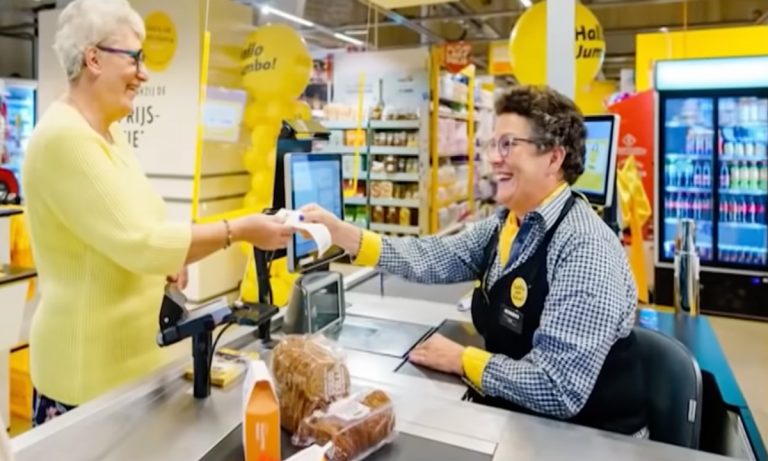
The Dutch supermarket chain Jumbo has introduced slower checkouts. The idea is to give customers more time not only to pay and pack, but also to talk to the cashiers. The aim is to counteract rampant loneliness, especially in old age. In the meantime, 200 of the 700 “Jumbo” stores in the Netherlands have such chatting checkouts.

One problem faced by older people worldwide is loneliness. Family members have moved away, friends have died or fallen ill. In addition, hectic schedules and unfamiliar techniques and processes make everyday life more difficult. In urban areas, this is compounded by anonymity. Going to the supermarket means getting out of one’s own four walls. At the same time, everything has to happen quickly at the checkout. A quick greeting, then you have to quickly throw all the groceries into the shopping bag and pay – that’s stress.

Jumbo stores have “chatting Checkouts to fight loneliness in the Netherlands

In 2019, the Dutch grocery chain “Jumbo” tried something new. As part of a campaign against loneliness by the Dutch government, they installed slower checkouts.

According to a survey, one in ten people in the Netherlands feel lonely. Of the 1.3 million adults over 75, as many as one in three say so.

The government’s campaign addressed older people on the one hand, encouraging them to get out and do something. On the other hand, it appealed to everyone in the population to take a look at their own elderly relatives and neighbors in the house.

The supermarket chain has addressed the issue in its own way. The chain has over 700 stores in the country and has set up a “Kletskassa,” or “chit-chat checkout,” to take the stress out of paying and give people a chance to talk. The first of these cash registers were installed in the town of Vlijmen. The idea was so well received that the company introduced chattering tills in 200 stores nationwide. In addition, chatting corners have been set up where customers can meet for coffee. The supermarket chain’s employees are also trained to recognize when someone is not feeling well – and to talk to them.

Source: https://scoop.me/netherlands-chatting-checkout/

‘Sugar Man’ Rodriguez wins court case for Royalties

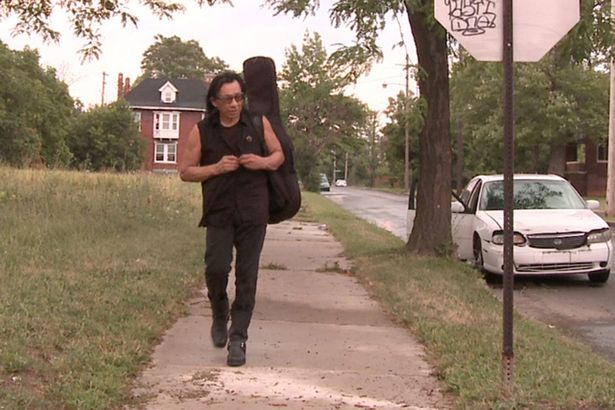
Rodriguez celebrated his 80th birthday on 10th July 2022, and he finally got paid the royalties due to him for almost 50 years of bootlegged albums back in the 70s.

Rodriguez was extremely popular in South Africa and interestingly enought also Australia, having performed various live concerts there in the late 70s and early 80s.

At His Best, compilation album was originally released exclusively in Australia by the record label Blue Goose Music in 1977. South Africans were unaware of his Australian success due to the harsh censorship enacted by the apartheid regime.

Unbeknownst to Rodriguez, bootleg copies of his albums went platinum in South Africa in the late 1970s.

Rodriguez himself didn’t know how famous he was in South Africa, because the money wasn’t exactly rolling in.

In the 1990s, two South Africans, Stephen “Sugar” Segerman and Craig Bartholomew Strydom set out on a mission to find out what happened to the mysterious 1970s icon, and in 2012 the Oscar-winning documentary Searching for Sugar Man was released.

The film focuses on the mysterious reputation of ‘Sugar Man’ in South Africa and the attempts of two SA music historians to track him down in the mid-1990s. And because of this effort and the success of the film, Rodriguez was able to win a court case for the missing royalties and has been paid his dues.

After decades of living a basic life, Rodriquez has enough money to retire. He still lives in the same modest house in Detroit and continues to live the simple life.

Stephen Segerman, is one of the South Africans who tracked him down. Now friends with Rodriguez, the record shop owner says:

“He’s very philosophical about what happened and I don’t think he’s held on to any anger. He’s a lovely, humble guy and, although success happened very late for him in life, he’s just happy people found out about his music and that he’s now famous around the world.

There was a court case that sorted out his publishing, so he started getting all the money he deserved.”

Happy 80th to Sixto Rodriguez!

Images: Redferns via Getty Images / Shutterstock

Join the South Africans UK Google Map, and subscribe to the SAUK newsletter.

Follow South Africans UK on Facebook and Instagram.

Bathing with a beer in a Pothole!

A video on TikTok has gone viral of a South African man enjoying a beer and taking a bath in a pothole. Got to love the sense of humour.

South African Transport Minister Fikile Mbalula launched the national pothole campaign in August last year. The campaign aims to change the face of municipal and provincial roads from pothole-riddled to an acceptable state of repair.

Happy Milk Tart Day!

Milk Tart or “Melktert” is a traditional South African dish, originally created by the Dutch settlers in the “Cape” dating back to the 1600s. The tart consists of a sweet pastry crust containing a custard filling made from milk, flour, sugar and eggs. The ratio of milk to eggs is higher than the traditional Portuguese custard tart or the Chinese egg tart, resulting in a lighter texture and a stronger milk flavour.

“Melktert” is believed to have developed from the Dutch mattentaart, a cheesecake-like dessert.

Found at fetes, markets and in most local supermarkets, it is safe to say Melktert is a firm staple food all over South Africa.

Food 24 has compiled a wonderful selection of traditional and not so traditional takes on the beloved Milk Tart. Click here to view.

Image: By DimiTalen – Own work, CC BY-SA 3.0, https://commons.wikimedia.org/w/index.php?curid=18076464

South African opera star Pretty Yende will sing at King Charles III’s coronation

South African opera star <a href=Pretty Yende will sing at King Charles III’s coronation" title="South African opera star Pretty Yende will sing at King Charles III’s coronation" />

Wayne Muller, Stellenbosch University

It’s been announced that South African opera star Pretty Yende will sing at King Charles III’s coronation on 6 May in Westminster Abbey, London. The 37-year-old soprano was elated.

The invitation is reminiscent of when Charles and the late Diana, Princess of Wales were married in 1981. For this occasion, the New Zealand soprano Kiri Te Kanawa’s beautiful voice beguiled the royal couple. Te Kanawa, being Maori, represented her indigenous community who were the victims of imperialism and colonialism.

Te Kanawa was the same age as Yende is when she gave her royal performance and Yende carries with her this colonial history too. Considering the previous British coronation was that of Queen Elizabeth II in 1953, with white males dominating the music programme, it will now, to the best of my knowledge, be the first time that a black person – let alone an African – performs at the coronation of a British monarch.

However, along with the elation at Yende’s news, there have also been opinions on social media that she should decline the invitation because of the legacy of British colonialism in South Africa.

It might be a valid point, but it is precisely Yende’s participation that will shatter the glass ceiling of yet another space from which Africans had been excluded for centuries. More so because she is an African practising a predominantly white western art.

Who is Pretty Yende?

Hailing from eMkhondo (Piet Retief) in Mpumalanga, a rural province in the east of South Africa, Yende has often told the story of how the Flower Duet from the opera Lakmé in a British Airways TV advert converted her to opera. A decade later she would become opera royalty.

Yende was a senior music student when I first heard her in 2007 in her professional debut in the Artscape Opera House in Cape Town, singing the title role in Massenet’s Manon. She already had a stand-out voice. At the time I wrote in a review that “South Africa now has a new diva”.

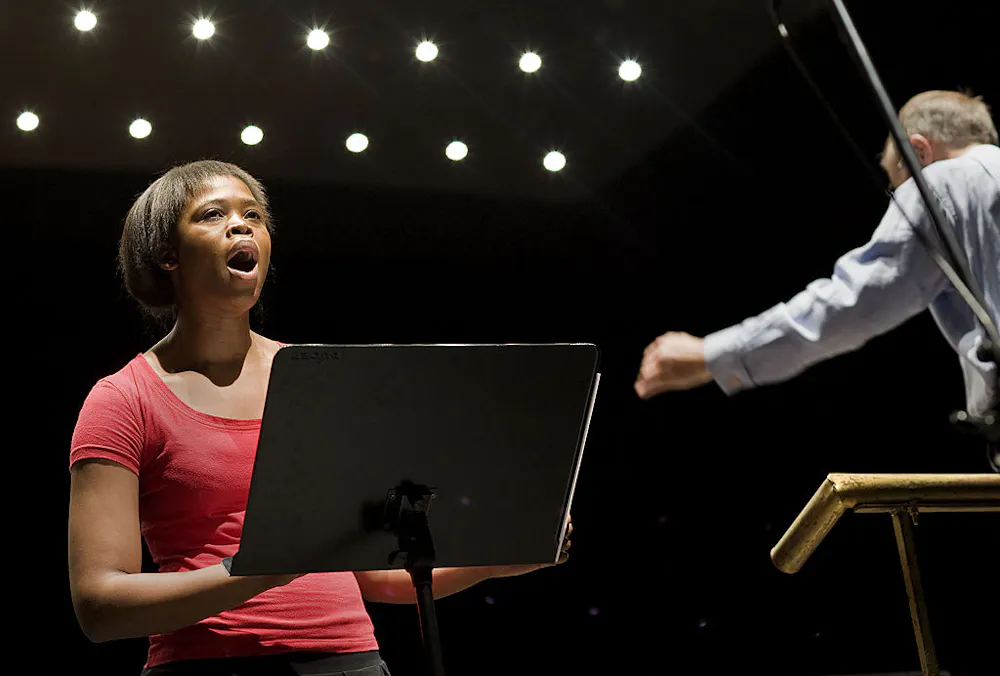
A woman in a red dress and short hair sings in fromt of a stand with music on it, an orchestra conductor visible to her side.
A young Yende in Cape Town in 2011. Rodger Bosch/AFP via Getty Images

Coupled with her ambition and drive, her voice would soon allow her to conquer international singing competitions, which then set her on a path towards performing in productions in the world’s major opera houses. Her international breakthrough came in 2013 at the Metropolitan Opera in New York when she stepped in as an understudy to sing Adèle in Rossini’s Le Comte Ory. The critics raved, and Yende became a star.

Yende’s activism

In 2019 she said in an interview that “being the first black Lucia (in Donizetti’s Lucia di Lammermoor) at Lincoln Centre is huge for me. Being the first black Lucia in Paris is huge for me. Being the first black person to have a new production of La Traviata in Opera Garnier in Paris is huge for me…” And, judging from her Instagram post when the news broke, being the first black soprano to sing at the coronation of a British monarch is also huge for her.

This speaks to Yende’s activism, which stems from her experiences of being black in a white dominated opera world. In June 2021, she spoke out about these experiences after being detained and strip searched at Charles de Gaulle airport in Paris due to visa issues. “Police brutality is real for someone who looks like me,” she said.

Last year, the international Black Opera Research Network, of which I am a member, hosted a seminar in which other black opera singers shared similar airport horrors. They seem simply to be the result of custom officials’ disbelief that a black person could be an opera singer, as detailed on their visa application form. https://www.youtube.com/embed/aWzsZyRISjc?wmode=transparent&start=0 Yende’s standout role as Lucia di Lammermoor.

These experiences, and similar racist practices in the opera industry, are part of a wider discourse and scholarship on blackness in opera. In very practical terms, it is about how these marginalised voices are pushing for a place on stage. Or, as US musicologist Naomi André puts it, the inclusion of “new voices, narratives, and experiences” in opera. It is not only about a singer’s heritage, but also about opera itself.

Let’s face it, the standard-repertoire operas that are performed most often worldwide were written by white European men, with mostly white characters, often with narratives about the lives of European aristocracy or bohemians. And the industry – from conductors to directors – are still mostly white. How do black bodies immerse themselves in this world?

Luckily, Yende’s US predecessors, such as Marion Anderson (the first black female soloist to sing at the Metropolitan Opera, in 1955), Leontyne Price and Jessye Norman, had begun to open those doors. Yende also has the example of her former University of Cape Town singing lecturer, Virginia Davids, who was the first black female soloist to sing a lead role in an opera in South Africa in 1988.

There has been a transformation in opera in South Africa since the fall of white minority rule and apartheid. We have seen the emergence of world-class black singers, the “Africanisation” of operatic stage settings and the composition of local operas foregrounding black histories, for instance. But only recently have the big opera stages of the world, where Yende practises her art, begun transforming.

Shattering the glass ceiling

One would like to believe that Charles III’s choice fell on Yende because of her activism in proclaiming that performing standard-repertoire opera roles is often different, historical and huge for a black singer even today.

This announcement reminds us that many performance spaces of Western European classical music and opera – such as a British coronation – remain enclosed and devoid of black voices.

Rather than decline an invitation to perform in such spaces, I would argue that it is essential that black bodies and voices enter and transform those places of exclusion, otherwise those spaces will remain as they are.

On 6 May, when Yende’s voice soars in the vast hallowed space of the 13th-century Westminster Abbey, it will be a historical and huge moment, and her voice will shatter the glass enclosures of yet another space of exclusion.

Wayne Muller, Publications Editor / Research Fellow (Africa Open Institute for Music, Research and Innovation), Stellenbosch University

This article is republished from The Conversation under a Creative Commons license. Read the original article.

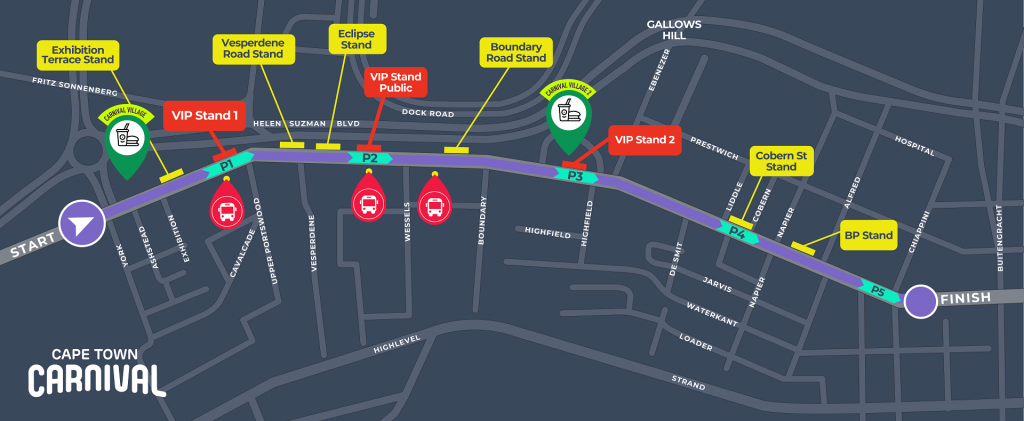
Cape Town Carnival 2023

The Cape Town Carnival hits the streets on 18th March 2023.

One incredible day where visitors to the carnival will be wowed by the spirit, talent and creative energy that exists in Cape Town.

All the people of Cape Town, South Africa and visitors to the city, are drawn together to celebrate the unique Carnival extravaganza that showcases incredible floats, costumes and artworks, dancing communities and talent, fun, passion.

Book your tickets:
https://www.quicket.co.za/events/202424-cape-town-carnival-2023/#/

Here’s how to grow your own Gem Squash in the UK

0

Gem Squash are a variety of Summer Squash also known as Cucurbito Pepo. They are actually quite straight forward to grow and don’t require much attention given the right conditions. Yes, even in the UK climate!

They can be planted indoors from March and outdoors from Mid April – to prevent any frost from damaging the seedlings. If you’re planting out in pots, ensure you have a good-sized pot and if you are planting them directly in the ground give them enough space to grow.

Providing they get watered regularly and get as much sun as possible, the little gems will be ready to harvest in around 100 days. 

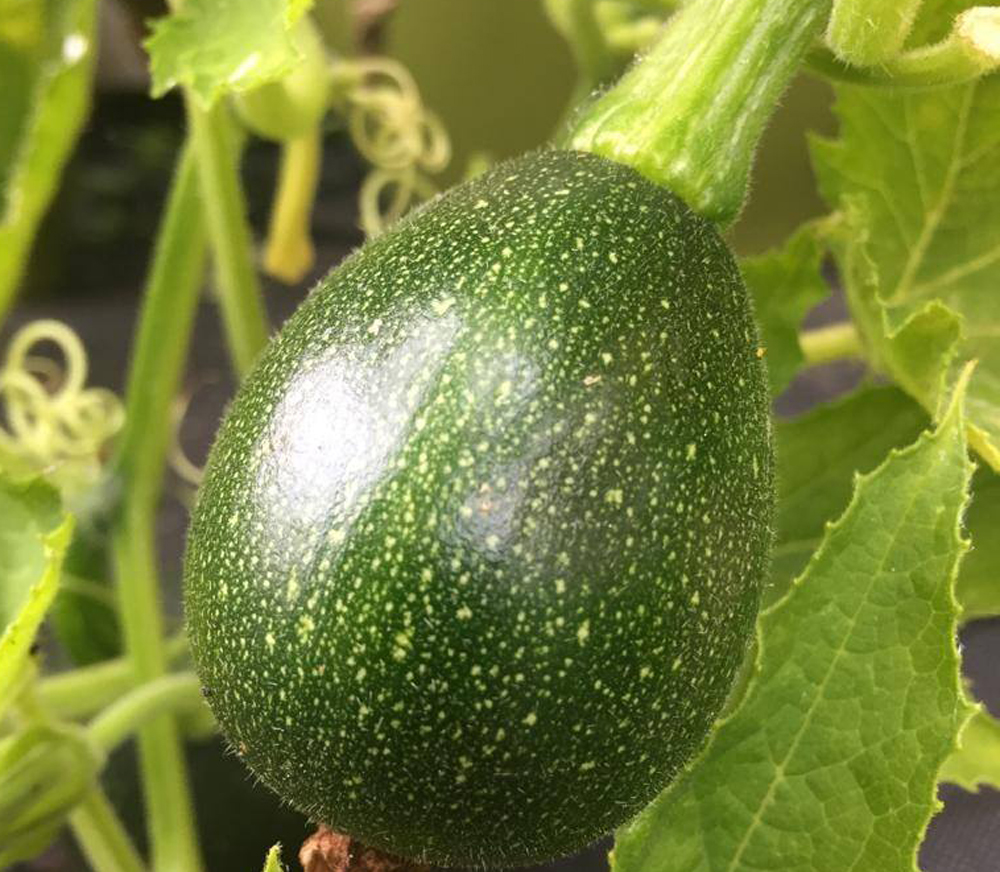
Gem Squash are a dark green cricket ball sized squash when ripe and have a tender yellow delicious tasting flesh.

In addition, Gem squash are low in calories and have good amounts of vitamin A and C, as well as iron, folate, potassium and niacin. 

Ricky and Wayde, from Gem Squash UK are two chaps born in Africa who missed their gems so much they decided to plant their own and have achieved year on year success.

They have even created a range of fabulous grow packs to get you started on your journey to homegrown veggie goodness.

Having initially started on only Gem Squash, we have now grown our family to include Patty Pan, Pumpkin, Butternut, Courgettes and Sunflowers. We will continue to grow and develop our range based on our customer feedback. 

Order your seeds, grow packs and plants online, delivered to your door at really great prices from Gem Squash UK.

Tetley is spilling the tea on the Bubble tea trend

The Bubble tea trend has taken the world – and more recently South Africa – by storm. The name itself is enough to inspire a reasonable amount of interest – so what exactly is Bubble tea?

Bubble tea, also known as Boba tea, is a drink native to Taiwan. It is made from a tea base (which can be black, green, or earl grey tea) and is usually mixed in a cocktail shaker with milk and tapioca pearls.

As it’s considered a trendy (and delicious!) beverage, Bubble tea bars have become commonplace in South Africa, with patrons enjoying the novelty of different flavours and variations, as well as the pearls (or Boba) which are drunk through a wide straw.

Some interesting facts about Bubble Tea

The original tapioca pearls were made by extracting starch from the cassava root, a long plant that originates in Brazil. However, modern tapioca pearls are sometimes made from cornstarch or other starches. Bubble tea originated in Aichung City in Taiwan in the late 1980s and was first created by Liu Han Chieh. The popularity of the drink initially grew among students who would buy Bubble tea from street vendors as a replacement for breakfast or a snack. Bubble tea has many names, including pearl milk tea, tapioca milk tea, boba tea, or boba. Popular Bubble tea flavours globally are Tiger Milk tea, Thai Milk tea, and Lychee Fruit tea.

Commenting on the trend, Tetley partner dietitian, Mbali Mapholi, explained that, while certainly a delicious refreshment, Bubble tea should be enjoyed in moderation:

“Although the health benefits of the base tea are still present, Bubble tea itself provides very few health benefits, though its calories and carbohydrates can provide you with a boost in energy. Bubble tea recipes usually contain high levels of sugar, which means if consumed frequently may contribute to a poor diet.”

Taking this into account, Mapholi has shared a Bubble tea recipe that can be tried at home and can be enjoyed in moderation as part of a balanced diet.

Tetley Black Bubble Tea Recipe

Ingredients

  • 4 Tetley Premium Blend tea bags
  • 1/4 cup quick-cooking tapioca pearls
  • 1/4 cup of milk of choice
  • 3 tablespoons brown sugar

Method

In a medium pot, bring 2 cups of water to a boil. Add in the tea bags and steep until the water cools completely. Meanwhile, cook the tapioca pearls according to the package, or the directions below. Drain the tea into a pitcher. Divide the cooked tapioca pearls into 2 large glasses. Add a few ice cubes to each glass. Pour 1 cup of the tea into each glass. Add ½ cup milk and 2-3 teaspoons of brown sugar into each glass. Stir and taste the bubble milk tea. Add more milk or sugar as needed to taste.

How to Cook Tapioca Pearls

Bring water to a boil in a pot. Slowly add in the tapioca pearls. Give the water a gentle stir so that the pearls do not stick to each other. Let the water boil for a minute. Cover the pot with a lid and reduce the heat to medium. Cook the tapioca pearls for 5 minutes or according to the instructions on the packet. Turn off the heat and leave the tapioca pearls covered for a few minutes. Drain the hot water and rinse the tapioca pearls in cold water for a little bit. Drain the cold water and transfer the pearls to a container.

Tetley Green Bubble Tea Recipe

For all those Green tea fans, Tetley Green tea influencer and fitness fanatic Carol Mkhize has developed a Green Bubble tea alternative.

Ingredients

  • 1 Tetley Mango flavoured Green tea plus Vitamin B5 flavoured tea bag.
  • 250ml boiling water
  • 1tsp honey
  • 100ml cold water
  • 4-5tsp of pomegranate Bursting Boba (can be purchased online)
  • 1 cup ice cubes
  • Mint leaves

Method

Steep 1 Tetley Mango flavoured Green teabag in 250ml boiling water and leave to brew for 10-15 minutes. Set the tea aside to cool at room temperature. Add 1tsp of honey to the tea then add 100ml of cold water to the tea. Add 4 tsp or the desired amount of pomegranate boba in a glass. Add some ice to your glass and some mint leaves. Pour the mango flavoured green-tea into the glass and top with boba bubbles. Garnish with mint.

To find more recipes, visit www.joekels.co.za.

South Africans flock to solar, thanks to load-shedding

0

In January, Versofy Solar received over 1500 enquiries from Cape Town alone. The company offers a range of solar solutions, including rent-to-own and solar subscriptions, ranging from an entry-level system priced at R1 999 a month.

The intense interest was in no small part due to Mayor Geordin Hill-Lewis’s announcement of his cash-for-power programme. From June businesses and, soon thereafter, residents with City-approved generation capacity will be paid to feed their excess energy back into the grid.

Further fuelling national interest in solar, in his State of the Nation Address, President Ramaphosa declared the energy crisis a State of Disaster and announced that businesses and households that install solar panels would benefit from tax incentives. (In July 2022 the President stated that “those who can and have installed solar panels in their homes or businesses will be able to sell surplus power they don’t need to Eskom”. This feed-in tariff was not mentioned in the SONA address but may still be in play.)

“We strongly support these moves,” says Ross Mains-Sheard, Director at Versofy. “The biggest problem that Eskom faces currently is their inability to generate sufficient energy to meet demand. Allowing those with embedded generation systems to feed their excess into the grid effectively increases generation capacity using private capital. By paying these solar customers for their excess power, the City of Cape Town will create a virtuous cycle, as will the government’s proposed tax breaks. The case for solar is even more appealing, incentivising more people to invest in solar, which further drives adoption and subsequent economies of scale.”

Hill-Lewis had previously announced the City’s Power Heroes programme, where residents are offered an incentive for voluntary energy savings at peak times. “We are very excited about the development of time-of-use tariffs,” said Mains-Sheard. “Our Versofy systems will give our customers the ability to take advantage of energy arbitrage. Such opportunities will encourage reduced demand during the peak hours and essentially flatten the energy demand curve.”

Countering objections

To the nay-sayers, Mains-Sheard points to examples like Vietnam, a developing nation with aspirations to become a developed, high-income country by 2050.

In April 2020, as the world locked down during the pandemic, Vietnam announced a 31 December deadline for those wishing to enjoy a 20-year rooftop-solar feed-in tariff of USD $0.0838 per KWh. According to PV-Tech, Vietnam’s rooftop solar installations skyrocketed after the announcement (particularly in the last two months of 2020) by 2 435%, “rising from a 2019 base of 378MWp to 9.583GWp, spread across almost 102 000 systems”.

On 31 December 2020, the Vietnam Ministry of Industry and Trade announced that cumulative PV capacity had reached 16.449GWp (13.160 GWac) – this included ground mount and floating solar projects.

Significantly, Vietnam uses gross metering for rooftop solar PV producers instead of net metering. “We urge Government and local municipalities to make the installation of bi-directional meters a feasible one,” Mains-Sheard notes. “The current costs of these meters may be a barrier to entry, as the payback period on the meter itself is not attractive.”

The main objection to 100% renewable power, says Mains-Sheard,  is the fact that wind and solar are reliant on natural conditions and cannot provide the continuous base load power that the national grid requires. “In the short-term, we agree that a stable grid will be a hybrid of traditional power plants, such as nuclear and coal, but with a much larger contribution of a renewable generation coming from wind and solar.”

Storage of renewable energy holds the key, he adds. “At a micro view, rooftop solar with storage has proved that renewables have the ability to provide perpetual energy generation. When aggregated, it has the ability to make a meaningful difference to both the adoption of renewables and, more importantly, dependence on the national grid.”

In the past year, Versofy has supplied:

Over 9 000 solar panels are producing more than 18MWh/day (4.14MW installed).

More than 1 700 batteries, equating to approximately 9MMh of energy storage. 

1 000 inverters

To put that in perspective, 18MWh/day: 

Can power a typical 300-bed hospital, power ±1 000 households, and equates to ± R1.5m/month worth of savings

*Note: the above figures are estimates and may vary depending on usage.

Versofy clients will have access to a super consumer-friendly, easy-to-use app. Unlike those currently available, the Versofy HOME App is built expressly for the South African energy landscape and consumer. Features include:

Dynamic load-shedding settings – the Versofy HOME App adjusts the system settings to best accommodate each client’s individual load-shedding schedule. Stage 6 suddenly announced? No problem, your batteries will automatically charge up to ensure that you are never without backup. Load shifting – the app has the ability to shift loads to get the most out of your solar system. Smart homes – they can be configured to control geysers, pool pumps, security cameras etc. In-app electricity purchase and sales rewards for good consumption behaviour from 3rd-party energy-conscious partners

“When the initiatives by the City of Cape Town and the national government go live, we will do our best to help our clients take advantage of the opportunity. As Former FNB CEO and Bank Zero founder Michael Jordaan said recently, South Africans will eventually find their own solutions to problems if the government or state-owned enterprises can’t perform. Look at how Capetonians ‘made a plan’ during the 2015-2018 drought. We’re not at all surprised that inquiries about our solar products have soared, and we look forward to being of service.”

To find out more about Versofy’s solar systems or their innovative rent-to-own/solar as a service solution, visit versofy.com