Home Blog Page 6

Ever Wondered What Happens When An Aircraft Gets De-iced?

0

While South Africa is still enjoying summer, the Northern Hemisphere is in the midst of winter. This means that many aircraft which make their way to Mzansi have to be de-iced before take-off. As one of the leading airlines in the world, KLM Royal Dutch Airlines shares exactly what happens during this process and gives insight into why de-icing an aircraft is extremely important.

KLM Royal Dutch Airlines gives more insight into the de-icing process in this video clip.

Maybe you’ve been aboard a plane, just before take-off, when it is suddenly surrounded by boom lifts that start spraying the aircraft with powerful jets of fluid. Was the whole aircraft shrouded in a vapour cloud, making you wonder what was going on? Well, that was de-icing.

The de-icing process can be pretty impressive. The vapour you see comes from the heated fluid hitting the frozen wings. In combination with the bright work lights on the de-icing vehicle, it all looks quite futuristic and it all gets even more spectacular when work starts on the fuselage and you can hear the powerful jets of fluid spraying left and right.

Snow, ice, hail

Winter contaminants – ice, snow, hail, sleet, frozen mist – disrupt the airflow over the wings, affecting an aircraft’s performance – and that’s something airlines want to avoid! This is why aircraft are cleaned just before take-off on a cold winter’s days. The de-icing process is done with a mixture of water and glycol, heated to a temperature of 70°C.

If it snows or hails during de-icing, the aircraft is also coated with a thick, un-warmed fluid, which offers temporary protection against snow and/or hail. Once an aircraft is airborne, it has its own systems to prevent ice build-up.

The fluid that KLM uses is not toxic or harmful to the environment. All the run-off fluid is collected and neatly disposed of.

Central De-icing Facility

Normally, de-icing takes place at a special facility at the airport. Once passengers and cargo are on board, the aircraft taxis over to this Central De-icing Facility, better known as CDF.

Aircraft leave their engines running during de-icing so that they can head straight to the runway for a safe and smooth take-off. If the winter weather is really grim, causing a traffic jam at the CDF, de-icing is sometimes done at the gate.

De-icing can take anything from three to 25 minutes to complete, depending on the type of aircraft and the degree of contamination. You can imagine that an Embraer 190 is easier to clean than a snowbound Boeing 747.

Permanent staff and volunteers

There is usually a group of permanent de-icers based at the airport. They ensure that aircraft can be de-iced 24/7. They are supported by temps, who do other work when the winter weather is mild. Then, there is a team of volunteers who come into action when the weather is at its worst. At Schiphol Airport in The Netherlands, this team consists of around 45 KLM superheroes who drop whatever they are doing and pull on their de-icing overalls if things get hectic at the CDF. All of these people have earned their de-icing diploma which means they are fully clued up on the strict procedures and the many legal and regulatory requirements.

Radio in South Africa turns 100 and collides with podcasting and streaming

0

Sisanda Nkoala, Cape Peninsula University of Technology

This year marks 100 years since radio was introduced in South Africa. The first experimental broadcast was at the Railway Headquarters in Johannesburg on 18 December 1923.

A century on, up to 94% of South Africans over the age of 15 confirmed in a recent survey that they owned a radio set in one form or another.

Radio remains firmly in place as the country’s most loved medium. Millions tune in daily to 40 commercial and public broadcast stations and over 250 community stations. Although other forms, like television, have threatened, as the song goes, to kill “the radio star”, the intimacy, immediacy and sociability of radio remain unmatched.

And yet, it’s worthwhile looking ahead at digital audio platforms such as online radio and podcasts, to forecast what the next century of audio broadcasting might and should sound like.

More and more South Africans are turning to digital audio formats. This is in part because of an increase in access to smartphones, along with better internet penetration. A 2022 study found that monthly online listening had grown to 61% of people surveyed – compared with 39% in 2019.

Apart from streaming and internet radio, there is also a growing trend of podcasting. This has arguably cemented audio broadcasting, in its various forms, as a key player in future mass media trends in the country.

Radio’s role in history

Online radio and podcasts must be understood within the context of rich history. Oral media have been central in South Africa for the development of cultural identities and languages. When radio first arrived, it was not meant to include broadcasts to the country’s indigenous language speakers.

It was only as part of efforts to gain the support of the majority black population during the second world war that black people were even thought of as a possible audience. Radio historian Thokozani Mhlambi explains:

Hugh Tracey, then head of the South African Broadcasting Corporation (SABC) in Durban, said he got the idea of broadcasting to African audiences in Natal when he discovered that a rumour was spreading among Africans that every Zulu speaker would earn 10 shillings a day when Hitler arrived.

Black South Africans were never really viewed as an audience meant to engage with the platform for entertainment and information. Radio was intended as a tool to shape their perspective based on what served the minority white authorities.

But the first isiZulu broadcast in 1941 at the Durban studios of the SABC changed things. Radio stations were launched in numerous indigenous languages, whose speakers became both listeners and content creators. They found a way to use its qualities to express their voice in a society that otherwise silenced them.

South African academics have argued that despite being designed mainly for propaganda, “radio was always far more multifaceted and slippery than was intended by colonial powers”. Through language and cultural knowledge, it offered the “ability to create new and sometimes unruly publics”.

Fast forward to 2022. A scan of some charts such as Chartable, which claims to rank podcasts based on popularity, shows that the most widely heard podcasts in South Africa are not, in fact, produced by South Africans. And all top 10 podcasts are in English. These trends run counter to what one observes in the radio landscape, where indigenous language radio stations attract more listeners than English ones.

The future of radio

The date of birth of online radio in South Africa is difficult to determine. No doubt the introduction of the internet in the early 1990s meant that those with access and means experimented with various forms of self-expression using the technology. As did the amateurs who first played around with radio in the 1920s.

Podcasting in South Africa is said to have taken off in 2015 or 2016. Listenership figures are hard to come by, but advertising spend indicates a growing appetite. A 2022 report found that podcast advertising revenue grew by 30.4% in 2020.

But queries have been raised around the figures that online radio stations report in South Africa, which some claim have been inflated. Another issue is access to expensive data. New online stations will struggle to attract listeners who are not wealthier South Africans.

Despite these challenges, some studies predict that the monthly listenership of podcasts in South Africa could rise to 19 million by 2024. Some reports put current podcast listenership at around 10% of the population. This is roughly six million people.

While available statistics are not definitive, speculation is that podcasts are where audience growth lies.

Indigenous language podcasts

The development of indigenous language podcasts, such as Epokothweni (“in the pocket” in isiXhosa) and iLukuluku (roughly translated as “curiosity” in isiZulu) marks a significant milestone in the South African media landscape. Speakers of these languages have previously had limited power in the sector. Through digital platforms, they have been able to tap into audiences not prioritised by a market dominated by English.

These productions deal with topics such as personal finance, science, technology and the arts. They also serve as repositories of indigenous knowledge systems, drawing on folklore, proverbs and idioms to articulate key messages. They do all this from the vantage point of relatively young black people negotiating their and their fellow South Africans’ identities in a post-apartheid era.

According to a 2021 Africa Podfest report:

Podcasting has afforded many (Africans) the space to tell stories that have been otherwise neglected and/or marginalised, allowing them to articulate the world and their experiences.

South Africa’s indigenous language communities were censored or silenced for decades during apartheid, preventing this.

Digital platforms are often viewed as more accessible and inclusive. But the stark realities of the digital divide in African contexts mean that citizens do not benefit equally from the technology.

Despite the possibilities they present, their uptake in South Africa will continue to trail behind that of radio.

Sisanda Nkoala, Senior Lecturer, Cape Peninsula University of Technology

This article is republished from The Conversation under a Creative Commons license. Read the original article.

Kim Prytz’s 20.5km Swim from Melkbos to Robben Island

0

World first – Cape Adventure Swimmer, Kim Prytz to swim 20.5km breaststroke in her Melkbosstrand – Robben Island – Melkbosstrand swim to raise funds for the Goedgedacht Trust and their Path onto Prosperity Olive Peace Grove

Capetonian adventure swimmer Kim Prytz, will become the first swimmer in the world to swim to Robben Island from Melkbosstrand and back, when she takes to the Cape’s unpredictable waters later this month.  Prytz is aiming to complete the demanding swim of 20.5km in 12 hours to raise much-needed funds and awareness for Goedgedacht Olive Peace Grove and their Path Onto Prosperity initiative. 

Whilst crawl is the traditional stroke recognised for this world-renowned swim, no one has completed the challenge or done it using breaststroke as their preferred means.  This will, however, mark Prytz’s seventh swim using this stroke, to the former prison island but her first in a double Melkbos attempt.

Prytz, who will turn 49 years old in May this year, hails from the Cape’s Southern Suburbs and is a music teacher (singing and piano), as well as an avid karate practitioner (she will be competing in the world championships later this year).  She also incorporates the daily practice of Qi Gong and Tai Chi into her training.

Of why she has chosen the Goedgedacht Trust as a beneficiary for her latest adventure, Prytz says: “Malmesbury is an area I visit often and the work the Trust does with rural children is exemplary and I couldn’t imagine a more valid and connected cause for me than supporting an organisation dedicated to peace and prosperity, which is what the world needs now more than ever.”

Valerie Govender, Marketing Manager at Goedgedacht Trust, is elated that attention is being drawn to the project’s good works: “We are delighted that Kim has chosen Goedgedacht as her charity of choice as she swims this gruelling course. Our Path Onto Prosperity centres are not just beacons of hope in the rural communities of the Swartland but catalysts for a brighter future too. As we celebrate 30 years, we are so very grateful for friends like Kim who support our work and allow us to make a difference where it matters most.”

Kim’s Prosperity Swim will be supported by Big Bay Events who will monitor the swim and record it for posterity, although of utmost importance to Prytz is her message to anyone who has ever been told “no” they could not do something, and to realise that with the right mindset, anything is possible.  “These long hours in the water are not a hardship for me as it has emerged as a practice of “profound meeting” and an opportunity to do a bit of good. My friend Lisa Kirsch initiated a training camp a few years ago and I have not looked back since and continue to follow my nose so to speak as to where to next.”

Prytz, who stopped taking no for answer the first time she entered the water for a long-distance swim, rises at 04H00 each morning and begins the day with meditation, before a 45-minute run and early morning Karate training seven days a week.  She also ensures her mind is in tip top condition with 10 hours of Qi Gong or Tai Chi per week and several sessions of warrior training or boxing. In between all of which, she shares her expertise with her students. 

To help support Kim and Goedgedacht Olive Peace Garden’s Path Onto Prosperity, please donate to: Olive Peace Grove via this link: https://www.goedgedacht.org/donate/ or directly to: Olive Peace Grove, Standard Bank Mowbray Branch, Account: 075170485.  Please reference: “Kim’s Swim”.

For media enquiries, interviews, more information or to attend the swim launch which will take place on a weather day between 19 – 28 February 2023, please contact Kaz Henderson on 082 339 1199 or kaz@networxpr.co.za 

For more information about Goedgedacht Trust please refer to their website at https://www.goedgedacht.org

5 Tips to Save on Energy Bills

0

Energy bills are on the rise, they are the highest they have ever been in the UK. It is no surprise people are looking to save money on energy costs. Here are 5 basic tips to get you saving.

  1. Save on the Shower
    Shower at the gym! If you’re not the gym-going type why not add a water-saving showerhead, you can pick one up for as little as £12. Turning off the taps while brushing teeth and limiting showering time will also contribute to reducing water and energy costs.
  2. Cook earlier or later
    Cook meals during off-peak times and reheat them the following day. Typically off-peak electricity times run for 7 hours, somewhere between 11 pm and 7.30 or 8 am. Check with your provider, may not apply to some. There is always a braai or potjie!
  3. Clothes and Dish Washing
    Set the timer on your washing machine and dishwasher to run during off peak electricity hours too.
  4. Eat wiser
    Consume more fresh vegetables, fruit and salads. Invest in an air fryer. You will save money by using the oven and stove less and you’ll become healthier.
  5. Manage your Heating
    Close radiators you do not need and minimize the amount of time the heating is on. Researchers at the University of Salford suggest drawing your curtains in the evening can reduce heat loss by up to 17%.

Find out more at: https://bit.ly/3xJlZ49

Follow South Africans UK on Facebook and Instagram.

Join the South African UK map and subscribe to our newsletter.

Liverpool SAFFA Sokkie

0

Hello Mense!

Nou gaan ons Sokkie!!!

We cordially invite all SAFFAS, their partners and friends to come and join us for an evening of kuier, sokkie, bunnychow and good times.

Our first event will take place in Liverpool and we will then move to a different city each month.

We will be featuring an authentic SA DJ that will get the party started. DJs for this event are 2tonsoffun and will be playing all Afrikaanse treffers along with some recent Afrikaans and English music.

There will also be a pop up shop run by the lovely Lisa of Lisa’s Emporium, giving you a chance to pre-order all your favourite SA goodies and bakes or just buy what you fancy on the night.

We will be offering you the chance to enjoy a lekker SA bunny chow made by Auntie M’s Home Made Delights and will of course also include plant based and gluten free options.

Come and join us and show these people how we do it!

Hier is ‘n kaans om ons Afrikaans te oefen, en vir Charlize te wys daar is baie meer as 44 net hier in Liverpool.

Winter in the UK – A South African Experience

0

Winters in the UK can be a lot harsher than that on the African continent dependent on where you resided in SA. If you are new to the UK you may find it quite a shock but all is not that bad, you just need to be equipped and make yourself as comfy as possible.

Heating is generally on between October and April in the UK and the rule of thumb is to program your heating to switch on early in the morning for an hour or so and then again in the early evening for about 2 hours. You may prefer to leave the heating on at a comfortable temperature all day throughout the winter. The average temperature is around 19°c. (Average 3-bedroomed home).

Heating can dry out the air so you could invest in a de-humidifier to correct the balance. To conserve energy switch certain radiators off in your home if you are not using the area. Shut doors and windows to reduce heat loss.

A long, comfy jacket, thermal underwear, a good pair of slippers, beanie, scarf, and gloves are a must. Let’s not forget the hot water bottle or electric blanket. Umbrellas are only £1 at the Poundshop.

If you have a log-burning fireplace on a cold winter’s night it may be cheaper to fire that baby up right now. Ensure wood is sourced, dried and stored correctly. There are loads of SA companies in the UK that import Namibian and South African wood. Visit our A to Z directory and support South African businesses in the UK.

Remember to open your windows from time to time to generate fresh airflow, especially in the kitchen and bathroom areas where condensation could occur. Wipe down windows, walls and doors in order to prevent mould.

Get about and explore, venture out every day even if it’s for a brisk walk, shopping, or a cake and coffee, you will be amazed at what you see and find.

Certain energy suppliers offer a cheaper energy rate after hours so check if your supplier offers these off-rate tariffs, you can conserve more energy by setting your dishwasher/washing machine timer to operate during these hours.

Support South African businesses in the UK and visit the A-Z directory.

Join the South Africans UK Google Map, and subscribe to the SAUK newsletter.

Follow South Africans UK on Facebook and Instagram.

Applying for your South African Passport in Manchester, London and Edinburgh

0

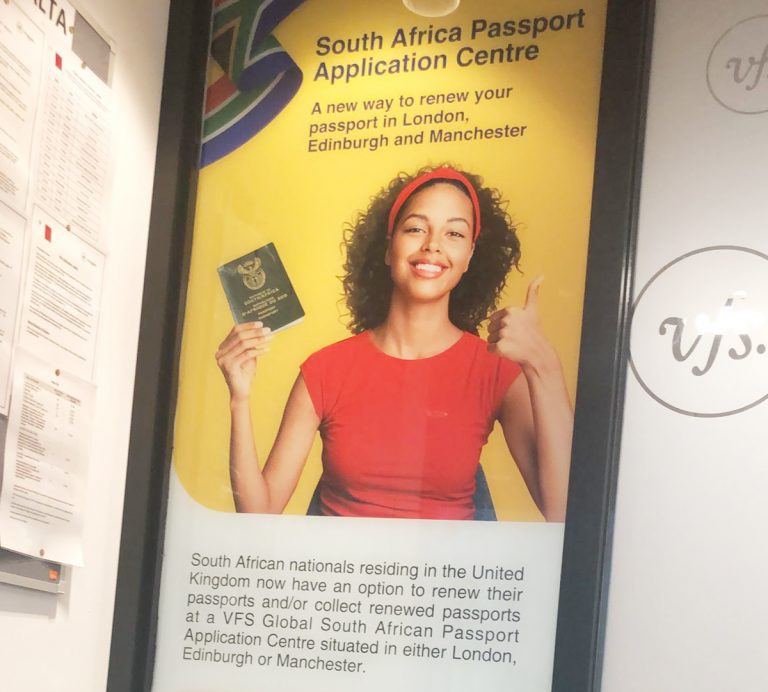
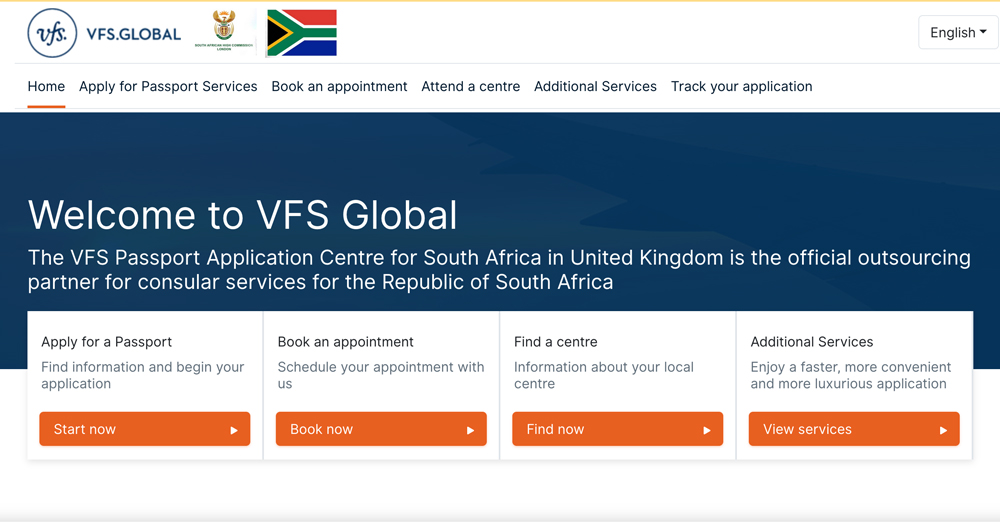
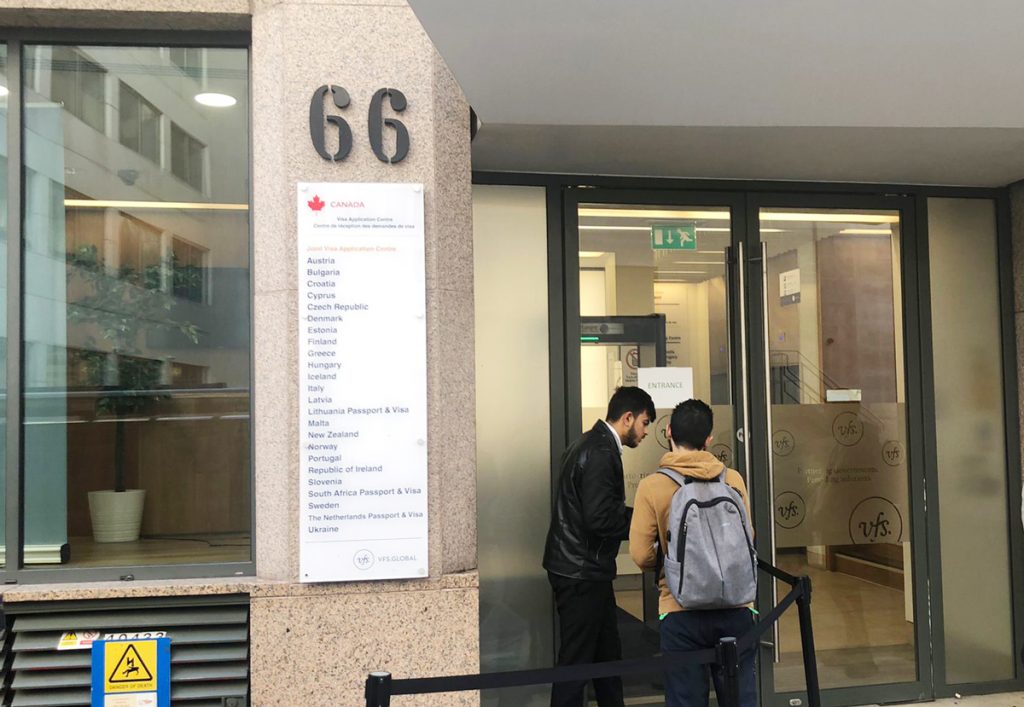
Click here to visit the VFS Passport Application Centre for South Africa in the United Kingdom, now the official outsourcing partner for consular services for South Africa.

We found it slightly difficult to register. If you encounter issues it may help to clear the history of your browser, refresh and try again a few hours later. The interface works well on Safari for Mac users and Chrome for the rest.

Everyone requires a certified copy of their South African passport which you can obtain at any main post office in your area for ±£13.

If you were born outside of South Africa and have SA citizenship, you will need a copy of your birth certificate. Take along your SA ID and make copies if you have it.

It may be a good idea to print out extra forms and fill in the essentials just in case you got a part wrong and need to redo.

Wherever necessary you should provide any original documents with a copy.

Click on the links below to download the forms you will need to apply for your South African Passport. If you are applying for your South African passport renewal you only need to download the DHA 73 and the BI-529.

If you do not know the ID numbers of your parents and other family members, just state you do not know on the citizenship forms and complete the information you do have.

DHA 73

BI-529 Determination of citizenship

Requirements for South African Adult Passport

Requirements for a Child Passport

Lost / Stolen Passport

Top Tip if you visit VFS London
“When you get into the waiting area there is a second area around the corner you cannot see, you need to find the South African section, we sat for 30 minutes and then heard about another waiting room around the corner.”

If you are part of a family or group, you’ll have to book individual appointments for each member of the family or group.

Pay in cash (London only), or by debit or credit card.

Processing time: VFS claims around 6 months?

You can track the status of your application online.

*Service Price (Per Applicant)Amount in GBP (inc. VAT)
SMS Service2.50
Photocopy Service0.5
Printing Service0.5
Photobooth12.00
* According to stats in September 2022 via VFS Global

Manchester – Passport Application Centre
50 Devonshire Street North M12 6JH Manchester
View on Google maps ->

London – Passport Application Centre
66 Wilson Street, EC2A 2BT, London
View on Google maps ->

Edinburgh – Passport Application Centre
1 Rennie’s Isle, Leith, EH6 6QT, Edinburgh
View on Google maps ->

Email: info.sapasportsinuk@vfsglobal.com

https://passport.vfsglobal.com/ppt/en/zaf/

Join the South Africans UK Google Map, and subscribe to the SAUK newsletter.

Follow South Africans UK on Facebook and Instagram.

10 Springbok Rugby Facts you probably didn’t know

0

If there is one thing South Africans love and support, it’s Rugby. The game that brought a nation together back in 1995! Here are 10 interesting facts about the Springboks you probably didn’t know.

  1. As of July 2022, 929 South African rugby union players have represented the Springboks, either by playing in a test match or touring with the national side.
  2. On July 30, 1891, South Africa played its first test match against the touring British Isles team. South Africa was new to the game and lost twenty matches.
  3. The Springboks’ first overseas game was in Glasgow, Scotland in 1906.
  4. Between 1903 and 1956, the Springboks never lost a series.
  5. A cease-fire was called during the Second Boer War in 1902 so the British and Boer forces could play a rugby match.
  6. The Springboks were not allowed to compete in the first two Rugby World Cup tournaments in 1987 and 1991 due to anti-apartheid sporting boycotts until their World Cup debut in 1995, when South Africa hosted the tournament.
  7. Percy Montgomery who retired in 2008 was the first Springbok to play in over 100 tests for South Africa.
  8. Up until 1928, the Springboks did a Zulu dance similar to the Haka before the game.
  9. The first draw in a Test for South Africa was against the British Lions played in Johannesburg (10 – 10) on 26 August 1903.
  10. The Springboks have the second-highest winning percentage in test rugby out of all the major test-playing nations.

“Sport has the power to change the world.  It has the power to inspire.  It has the power to unite people in a way that little else does.  It speaks to youth in a language they understand.  Sport can create hope where once there was despair.” – Nelson Mandela

Join the South Africans UK Google Map, and subscribe to the SAUK newsletter.

Follow South Africans UK on Facebook and Instagram.

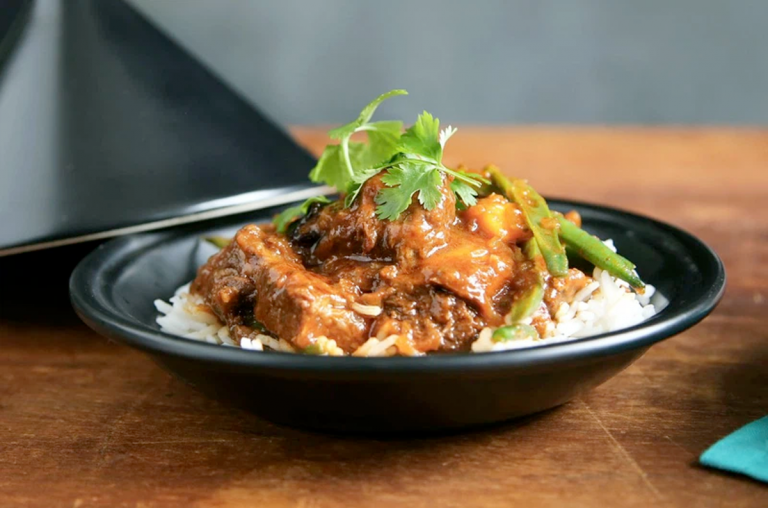
Easy Durban Lamb Curry

You cannot go wrong with a hearty, spicy Durban Lamb curry, especially in the winter months. Serve this delicious and easy to make dish with rice, roti, naan bread or even in a bunny chow.

Prep time – 10 minutes

Cooking time – 1 hour 

You will need

  • 500g lamb on the bone
  • 100ml vegetable oil
  • 1 onion, chopped
  • 2 cinnamon sticks
  • 1 tsp cardamom pod
  • 2 bay leaves
  • 1 curry leaf
  • 1 tsp garlic paste
  • 1 tsp ginger pasta
  • 2 tbsp masala spice
  • 1 tsp turmeric
  • 1 tsp garam masala
  • 400g tomatoes, whole
  • 2 potatoes, peeled and cut into cubes
  • ¾ cup water
  • Salt to taste
  • fresh coriander, to garnish

Method

  • Heat the oil in large pot. Sear the lamb for about 8 minutes until brown. Remove and set aside.
  • Add cinnamon sticks, cardamom pods, bay leaf and curry leaf and fry for a few seconds until fragrant.
  • Add the chopped onion and fry until slightly brown, ±5 mins.
  • Add the garlic and ginger and sauté for ±2 mins.
  • Add the lamb back into the pot.
  • Add masala, turmeric and garam masala until it forms a paste. Add a little water if the paste is too thick.
  • Add tin of tomatoes. Cover and simmer for 15 minutes or until the sauce starts to thicken.
  • Add the potatoes and the water. Turn the heat down to low and simmer until the potatoes are soft.
  • Garnish with fresh coriander and serve with rice, roti or as a bunny chow.

Recipe by Jessica Alberts

Pic: CA Creative on Unsplash

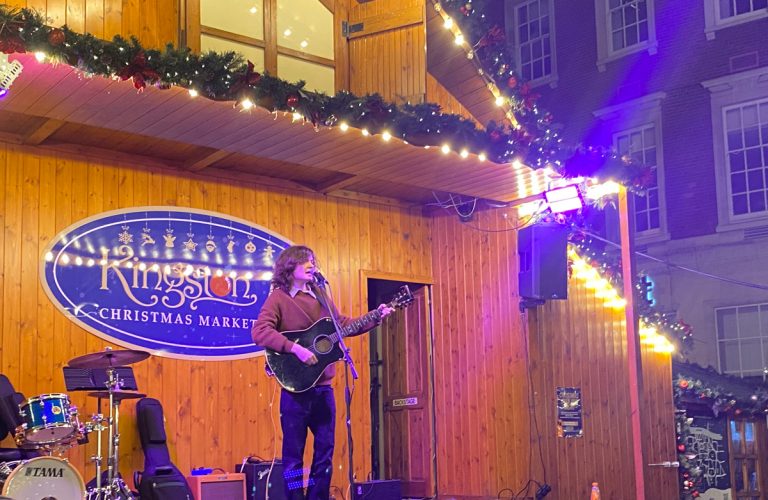
Kingston Christmas Market

Get into the festive spirit at Kingston Christmas Market, wander around under twinkling fairy lights, enjoy a mug of mulled wine and choose from an assortment of delicious food to get you in the Christmas spirit. 

The market is open between 10th November – 24th December 2022. Lovely stalls to shop, live music and lots of entertainment over the festive season. Sure is worth a visit.

Visit the website for updated information.

Find out more at: https://bit.ly/3xJlZ49

Follow South Africans UK on Facebook and Instagram.

Join the South African UK map and subscribe to our newsletter.