Home Blog Page 8

Africa in space: 5 interesting reads on the continent’s achievements

0

Moina Spooner, The Conversation and Natasha Joseph, The Conversation

Sputnik 1 was launched by the former Soviet Union on October 4, 1957, marking the start of the space age. Since then space activity has delivered many benefits. For instance, satellite imagery can be used in agriculture to predict food shortages and surplus harvests. It can also be used to forecast and monitor natural disasters like flooding.

In recognition of this, by the second decade of the 21st century, more than 50 countries had space agencies, or other government bodies, carrying out space activities.

Some African countries are also making their mark. The continent’s evolving space sector is reportedly worth USD$400 billion today.

Various experts from across the continent have published articles on The Conversation Africa, revealing the hopes, needs and achievements of Africa’s space ambitions. Here are five insightful reads.


Outer space programme is key to meeting Africa’s needs

Recognising the importance of outer space, Agenda 2063 – part of Africa’s development blueprint, put together by the African Union – includes an Africa outer space programme. It focuses on Earth observation, meteorology, satellite communication, satellite navigation and astronomy. Etim Offiong, an expert from the Scientific Officer at the African Regional Centre for Space Science, argues that Africa’s outer space programme is integral to meeting many needs that African countries have.

Achievements of the Cape’s astronomers

In some African countries, astronomical research is quite developed. South African astronomy, for instance, is at the forefront of many initiatives and discoveries. The South African Astronomical Observatory in Cape Town is the oldest permanent observatory in the southern hemisphere: it turned 200 in 2020.

Astronomer Ian Glass reveals just how much Cape astronomers have achieved. They were responsible for, among other things, the first measurement of the distance to a star; the first photographic sky survey and the accurate measurement of the distance to the sun.

Africa’s nanosatellites

One landmark moment for African space science happened on 13 January 2022 when The Cape Peninsula University of Technology, based in Cape Town, launched its third satellite mission into space. The nanosatellite constellation, consisting of three satellites – called MDASat (Marine Domain Awareness) – was launched from the Cape Canaveral rocket launch site in Florida in the US.

Space engineer, Nyameko Royi, who works on the project, reveals that these small satellites collect data that will enhance the security and protection of South African marine resources. They do this by monitoring and identifying foreign vessels within the country’s exclusive economic zone.

Strides made by Senegal

Senegal has also made great strides in astronomy and planetary sciences in recent years. Dozens of scientists from NASA and France, along with five tons of astronomical equipment descended on Dakar, Senegal in August 2018. They joined 21 Senegalese scientists in an important mission: collecting precious data in preparation for the flyby of an asteroid called Ultima Thule on January 2019. The project marked the first time Senegal was involved in a space mission to explore our solar system.

Geologist, David Baratoux, explains why Senegal was chosen to be involved in a space mission to explore our solar system.

The moves Ghana is making

Ghana is another country that’s making moves in the space sector. The government has made a bid to host the African Union’s planned Space Agency and The Ghana Space Science & Technology Institute has been established to train specialists and to convert space research into commercial applications. It’s also a participant in the Square Kilometre Array (SKA) radio telescope project.

But, argues legal expert Julia Selman Ayetey, to harness the full benefits of space technology Ghana needs space legislation and regulations.

Moina Spooner, Assistant Editor, The Conversation and Natasha Joseph, Commissioning Editor, The Conversation

This article is republished from The Conversation under a Creative Commons license. Read the original article.

Find out more at: https://bit.ly/3xJlZ49

Follow South Africans UK on Facebook and Instagram.

Join the South African UK map and subscribe to our newsletter.

You won’t believe this South African Flight

0

Holly Clark was recently on a flight from Cape Town to Johannesburg and was amazed at the good behaviour of the passengers. The airline only allows people to disembark 2 rows at a time. “Everyone is kind and goes by the rules and waits patiently”.

She is not sure Americans could behave in such a civil manner. The video has gone viral on TikTok.

Find out more at: https://bit.ly/3xJlZ49

Follow South Africans UK on Facebook and Instagram.

Join the South African UK map and subscribe to our newsletter.
Good Old Bunny Chow

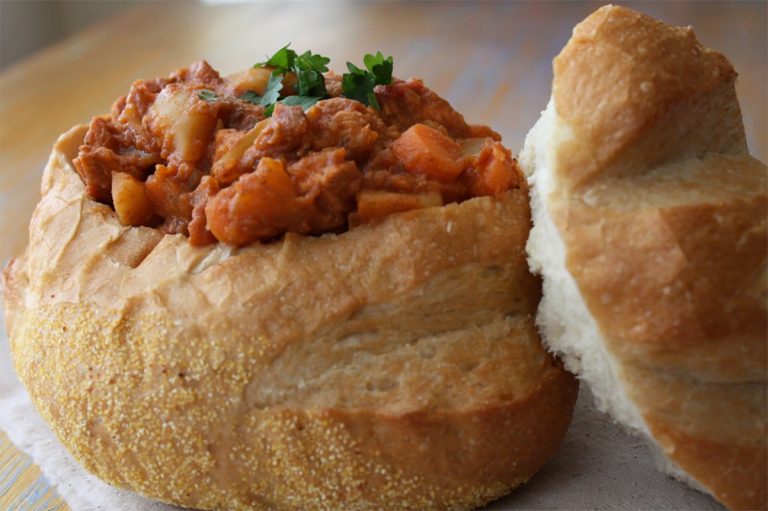
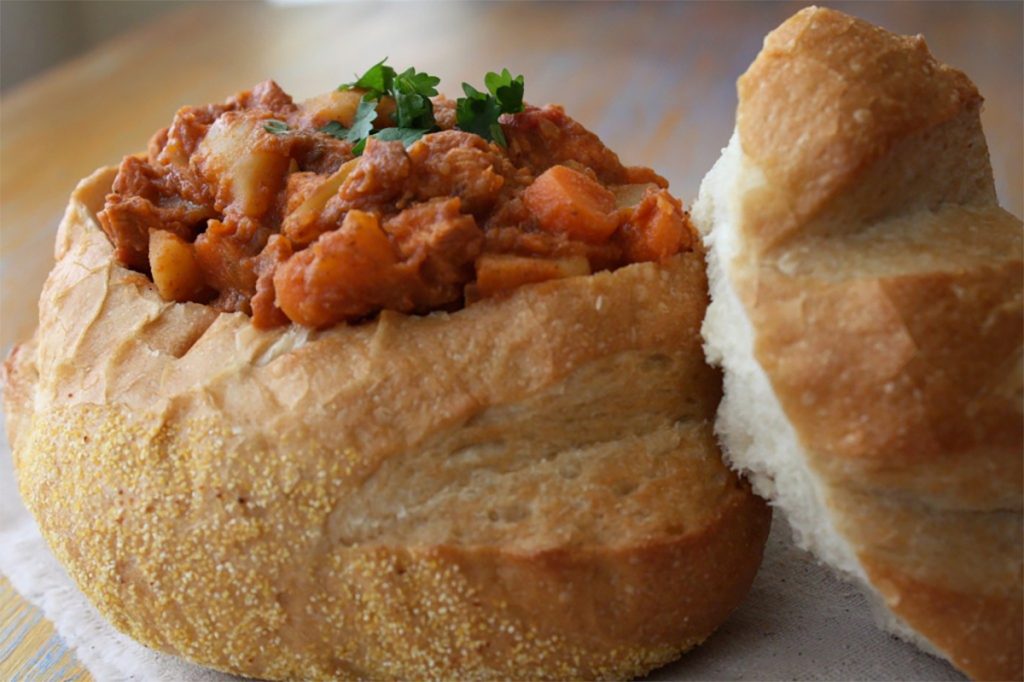
Bunny chow, often referred to simply as a bunny, is a South African fast food dish consisting of a hollowed-out loaf of white bread filled with curry.

It originated among the Indian South Africans of Durban. The exact origins of the Bunny Chow can be debated but one thing that is certain is the fact that Durban has contributed one major delicious dish to world cuisine. Bunny Chow is not commonly known by Indian communities outside of South Africa.

There may also be a debate as to what you can put in your bunny. Literally whatever floats your boat. You can make your bunny chow with lamb, mutton, chicken, vegetable, beans or even beef. In Johannesburg, you’ll even find a bunny with egg and polony.

We’d say you could eat it with a knife and fork but that would be wrong.

Heres a few recipes you might like to try.

Chicken Bunny Chow

https://thetravelbite.com/recipes/recipe-south-african-bunny-chow/

This recipe was adapted from a seafood bunny chow by ©Rachelle Lucas. A quick 15 minutes prep and you’ll be ready to serve in under an hour.

Brisket Bunny Chow

https://realfood.tesco.com/recipes/brisket-bunny-chow.html

This is a UK Tesco recipe so you are guaranteed to get your ingredients in one shop. Some South Africans turn their nose up to a beef bunny but we think this recipe works and is super easy to prepare.

Chickpea Vegetarian Bunny Chow

http://www.veggiebelly.com/2010/05/bunny-chow.html

A slight twist on this recipe as instead of using a loaf a bread, the chef has opted for mini ciabatta rolls. Great veggie dish! There are other fabulous veggie recipes on this site too.

Watch Megha Joshi make a vegetarian Bunny Chow.

If you’re interested in more South African related content please Like and share our Facebook page to stay updated.

Can an African team win the World Cup? A new study crunches the numbers

0

Matthew Andrews, Harvard Kennedy School

Many football lovers hope an African team will finally win the men’s 2022 Fifa World Cup. The world has been waiting for this since the great Brazilian player Pelé predicted (in the 1970s) that an African country would win before the year 2000. That didn’t happen, but it didn’t stop Patrice Motsepe, president of the Confederation of African Football, from saying (in 2021):

An African team must win the World Cup in the near future.

But is it realistic to keep hoping? Are African teams doing what they need to compete with the world’s best, making it just a matter of time? Or is an African win possible if countries do something different? Or is an African win simply impossible, the stuff of false hope?

I tackle this multi-part question in a recent research paper that draws on various data sources (including the Elo ratings database) to compare competitive records in the 2010s. It looks at top African contenders (Algeria, Cameroon, Côte d’Ivoire, Egypt, Ghana, Morocco, Nigeria, Senegal, Tunisia) and recent World Cup finalists and semi-finalists (Belgium, Brazil, Croatia, England, France, Germany, Spain) to see if African countries are really competing with world soccer’s best. And if not, why?

I find a significant competitive gap between African countries and the world’s best, which seems to have grown over recent generations. This gap is not encouraging for those hoping for an African World Cup win.

The study

My analysis captures two dimensions of each country’s competitive record: how they compete as a participant (how much they play, who they play against and in which tournaments) and how they compete as a rival (how often they win, especially against elite teams and in high profile tournaments).

Unfortunately, the records of African countries lagged behind those of top nations on both dimensions. Africa’s best played lower levels of competition and won less often. Instead of competing with the world’s best, Africa’s top countries seem better matched to a country like Greece, which has played in three World Cup final stages and made the last 16 in 2014. This is an impressive record, but few people outside Greece consider the country a potential World Cup winner. So why do we think African countries should carry such hope?

I found that Africa’s top countries’ competitive records were more like current World Cup contenders in prior decades (even in the 1970s, when Pelé made his prediction). Tunisia and France had very similar participant and rival scores in the 1970s, for instance, but France now scores much higher than Tunisia on both dimensions. This suggests that Africa’s best competitors have become relatively less competitive over time.

Such observation is surprising when one considers how much has been done to expand Africa’s role in world soccer since the 1970s. Countries on the continent have gained more access to World Cup final stages and they compete in more intra-continental competition than ever before (with an expanded Africa Cup of Nations, in particular). In addition, Africa’s players have proved their talent and had increased exposure to the best of world soccer. Over 200 Africans currently ply their trade in Europe’s big five leagues.

Why are African teams less competitive?

Regardless of these advances, I believe African countries have become less competitive because they do not compete regularly with the world’s best nations. Less than 20% of Africa’s top countries’ matches are against elite contenders. The World Cup semi-finalists and finalists play between 30% and 60% of their annual matches against elite nations. It is unsurprising that African countries also win far fewer of these high-level matches: Nigeria took only 30% of the points in these matches in the 2010s – England took 68%.

Studies from various research papers tell us that teams become more competitive when they “play up” against top opposition. “Playing down” against weak opposition makes them less competitive. This is because teams learn whenever they play, about the on-field and off-field strategies and technologies of their opponents. Top national teams have the most advanced technologies, many of which are cutting edge and have not yet been shared. The only way to learn about them is through regular competition.

Africa’s top soccer playing nations do not compete regularly with top nations and are thus not able to learn these technologies. They may dominate continental tournaments, therefore, but will ultimately lack the knowhow needed to really compete – consistently and regularly – with the world’s best.

World Cup chances

I do believe that African countries can win the odd game against a global power (and we have seen such results over time). But the world champion must overcome at least five elite opponents (and draw against two more) in the next month. None of the African contenders in this year’s World Cup has won five matches against elite opposition in the last five years.

Arguably Cameroon’s best result against elite non-African opponents since 2017 was a friendly draw against Japan. Ghana managed two friendly draws against Chile and Japan. Morocco had two friendly wins against Chile and Serbia. Senegal had a friendly draw against Brazil. Tunisia’s best were friendly wins against Chile and Japan and a friendly draw against Portugal. Of course, friendlies are not the same as competitive matches.

So, sadly, I don’t think an African team will win this year’s World Cup. But I do think an African team could win in future – if Africa’s best play up against better teams and learn how to compete at that level.

What it would take

This would require a decision by Africa’s top nations to play their B teams in African competitions and schedule more matches against high level opponents for their A teams. I would expect the African teams to lose more of these games than they win – at least at first – but would bet they win more and more over time, enhancing their chances of becoming the team that can beat anyone in the 2026 or 2030 World Cups. I would also bet that African countries that choose to keep playing down will never win the World Cup.

Africans should hold onto the hope of winning, but ensure they do the work needed to build teams and systems that make this hope a reality. As former Italian player turned manager Antonio Conte says:

To use the verb ‘to win’ is more simple than winning because to win you have to build something important, be solid … Then you’re ready to win. Otherwise you have to hope.

I’m one of the people who hope Africa will win the World Cup. The countries of Africa have amazing potential – on the soccer field and off it – but many Africans need to see that potential realised. There is no better place to demonstrate what the continent’s people can do than the global soccer arena. But more work is needed for this to happen.

Matthew Andrews, Edward S. Mason Senior Lecturer in International Development, Harvard Kennedy School

This article is republished from The Conversation under a Creative Commons license. Read the original article.

Pic: Senegal’s goalkeeper Tony Sylva celebrates his side’s famous win against France at the 2002 Fifa World Cup. Simon Bruty/Anychance/Getty Images

UK: 4-Day week trial shows first successes

0

The world’s largest trial of a 4-day week in the UK has got off to a successful start and is showing initial positive results. CNN Business questioned employees and participating companies: Many do not want to go back to the long working hours after the test phase – that’s how successful the reduction in working hours has been so far.

Since June 2022, 3,300 employees in 70 companies and organizations in the United Kingdom have been working 80 per cent of their normal working hours and receiving full pay. The trial is one of a number of experiments investigating the effects of shorter working hours. For example, the biggest trial to date of a 4-day week in Iceland was an overwhelming success. Field trials also started in Ireland or Scotland. CNN Business checked in with the participating British companies in early August and found similar success: The majority of employees want to keep the reduced working hours even after the end of the test phase. This is because employees are already feeling the benefits after the past eight weeks, or as one participant in the trial describes it:

“The five-day week is a 20th century concept that is no longer suitable for the 21st century.”

UK 4-day week trial: Work shorter hours for the same salary

The trial is organized by 4-Day-Week-Global, together with the think tank “Autonomy”. Researchers from the universities of Cambridge, Oxford, and Boston College are accompanying the field trial. They are studying the impact of shorter working hours on productivity, employee well-being, the environment and gender equality. Employees are expected to follow the “100:80:100 model.” They receive 100 per cent of the pay for 80 per cent of the time. In return, they are expected to try to maintain 100 per cent productivity. The trial is to run from June to November when companies can decide whether to stick with the new working hours model or return to longer hours.

The new daily routine is “phenomenal”

After the first eight weeks, CNN Business checked in with several companies and learned from some employees that they are already “feeling happier, healthier and doing their jobs better.” Lisa Gilbert, a manager at a credit provider, for example, describes the new routine to CNN Business as “phenomenal” and “life-changing.” She says she can really enjoy the weekend because she can now use Fridays to get housework or other obligations done – without feeling guilty. 

Other respondents say the extra day made it possible to “pursue new hobbies, fulfil long-standing ambitions or simply invest more time in their relationships,” according to CNN Business. While some employees used the time to take cooking classes or piano lessons, others went fishing, exercised or devoted themselves to volunteer work. For example, Mark Howland, marketing and communications director at a charity bank, told the online magazine:

“On my day off, I’d go for pretty long bike rides, take care of myself, take time off, and then have the whole weekend to do things around the house and spend time with family.”

Shorter meetings, more concentrated work

The changeover was not smooth everywhere. At one London PR agency, it was even “really chaotic,” as Managing Director Samantha Losey recounts. But after two weeks, her team has developed successful methods to achieve the same results in the shorter time available. These include shorter meetings and periods for more focused work. She expects 75 percent of the company will be able to maintain productivity over the course of the six-month experiment – allowing them to keep the four-day work week.

“The team is fighting incredibly hard for this so far,” she says.

This finding is also consistent with the evaluation in the Icelandic experiment. There, it was also shown that the most effective methods were very specifically adapted to the respective workplace: for example, fewer or shorter meetings or a better distribution of tasks between the staff members. The nursing staff changed shift patterns and some offices closed earlier on Fridays because there was less to do.

This article was republished from https://scoop.me


Join the South Africans UK Google Map, and subscribe to the SAUK newsletter.

Follow South Africans UK on Facebook and Instagram.

Jeremy Loops Live in London

0

London homies! It’s been a minute! See you at Eventim Apollo on 6 October for our biggest show in Europe ever! Tickets are available now!

Age Restriction: 14’s and under to be accompanied by an adult
No under 3s permitted

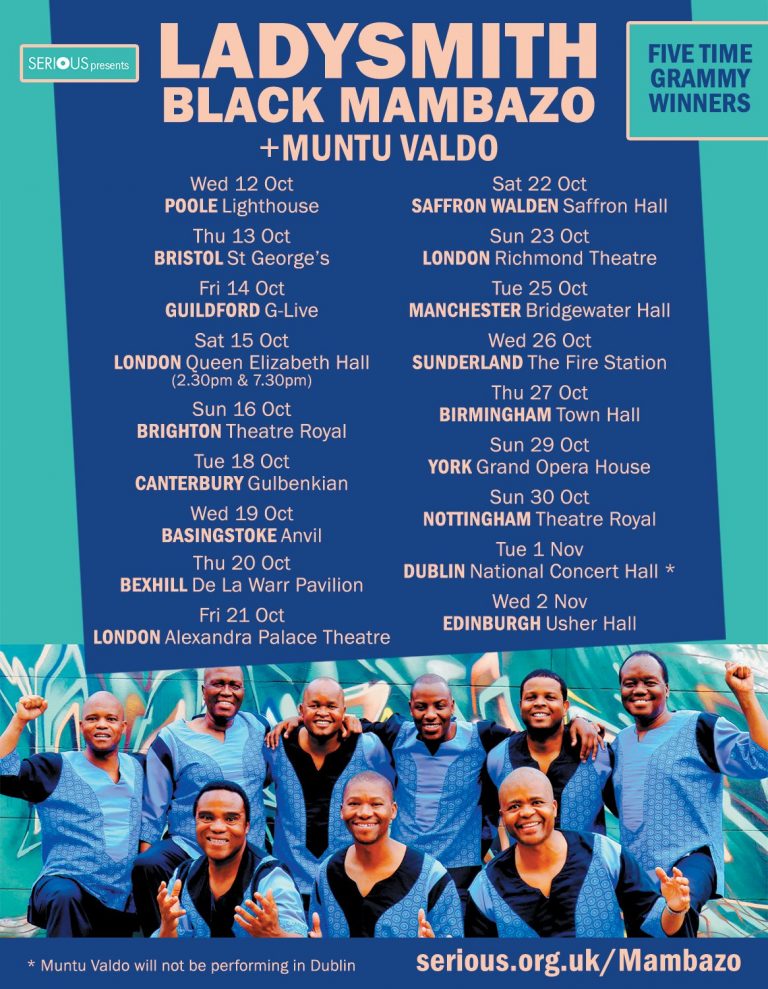
Ladysmith Black Mambazo

0
The South African vocal powerhouse play their first British Isles tour for many years.
New Dates Added at serious.org.uk/mambazo
Wed 12 Oct POOLE Lighthouse
Thu 13 Oct BRISTOL St George’s
Fri 14 Oct GUILDFORD G-Live
Sat 15 Oct LONDON Queen Elizabeth Hall (two shows – 2.30pm & 7.30pm)
Sun 16 Oct BRIGHTON Theatre Royal
Tue 18 Oct CANTERBURY Gulbenkian
Wed 19 Oct BASINGSTOKE Anvil
Thu 20 Oct BEXHILL De La Warr Pavilion
Fri 21 Oct LONDON Alexandra Palace
Sat 22 Oct SAFFRON WALDEN Saffron Hall
Sun 23 Oct RICHMOND Theatre
Tue 25 Oct MANCHESTER Bridgewater Hall
Wed 26 Oct SUNDERLAND The Fire Station
Thu 27 Oct BIRMINGHAM Town Hall
Sat 29 Oct YORK Grand Opera House
Sun 30 Oct NOTTINGHAM Theatre Royal
Tue 1 Nov DUBLIN National Concert Hall
Wed 2 Nov EDINBURGH Usher Hall
Since they shot to global stardom on Paul Simon’s Graceland album, Mambazo has been recognised as one of the world’s great vocal groups.
‘Truly great singing, balancing soulful ballads and traditional dance songs with exquisite and perfectly timed harmony work’ (Guardian)
Info and tickets at serious.org.uk/mambazo

Where to celebrate Heritage Day in the UK

0

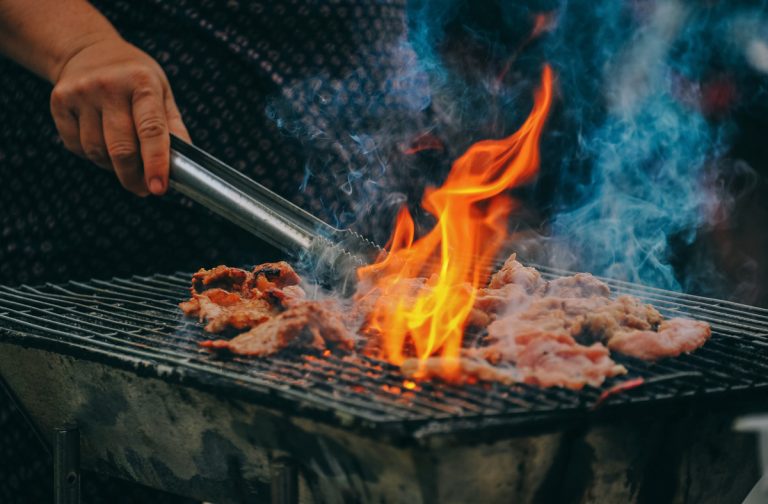
Heritage Day is around the corner, time for South Africans around the world to bring out the braais and celebrate the diverse cultures of the rainbow nation.

Heritage Day falls on a Saturday this year so there are no excuses not to join in the celebrations.

Here are a few events around the UK to meet fellow South Africans and enjoy Heritage Day together.

Heritage Day Bring & Braai & Sokkie
The Nene Hall, Daventry, Northamptonshire

South Africa Heritage Day
Almondsbury Creative, Bristol

South African Heritage Braai Day
The Stag and Huntsman Hambleden, Henley-on-Thames

Beats & Braai – South African Heritage Day Special
Vauxhall Food & Beer Garden, London

Lazy Sunday South African Braai
Billericay Brewing Company, Essex

Park Tavern Rugby and Heritage Day
Merton Road, London

Heritage Day Bring & Braai
High Lodge, Thetford Forest

The 24th of September was known as Shaka Day in commemoration of Shaka, the Zulu King. Every year people gather at the Shaka Memorial to honour him. When the Public Holidays Bill was presented to the post-ApartheidParliament of South Africa in 1996 it did not include 24th September as a proposed public holiday. The Inkatha Freedom Party (IFP) objected to the bill and then reached a compromise and the day was given its present title and accepted as a public holiday now known as Heritage Day and to some Braai Day.

Find out more at: https://bit.ly/3xJlZ49

Follow South Africans UK on Facebook and Instagram.

Join the South African UK map and subscribe to our newsletter.
Heritage Day Bring and Braai

0
The braai will be at High Lodge, Thetford Forest. IP27 0AF.
We have booked braai number 7. It’s a bring and braai. Please bring own ‘vleis en bygeregte’ chair, blanket. I will have a few snacks and charcoal.
It starts at 11 am
The phone signal is not great there so please make sure you know where it is beforehand.
Call Leizl for more info 07562011629

Who Knew about Elvis Blue and Elvis Brew?

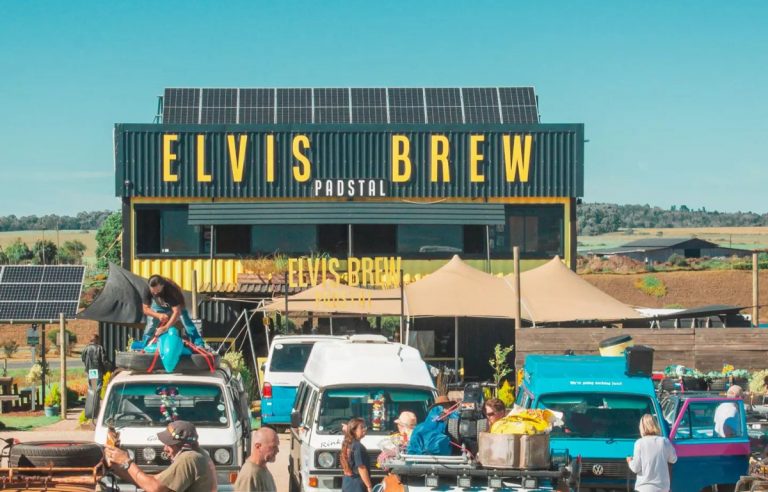
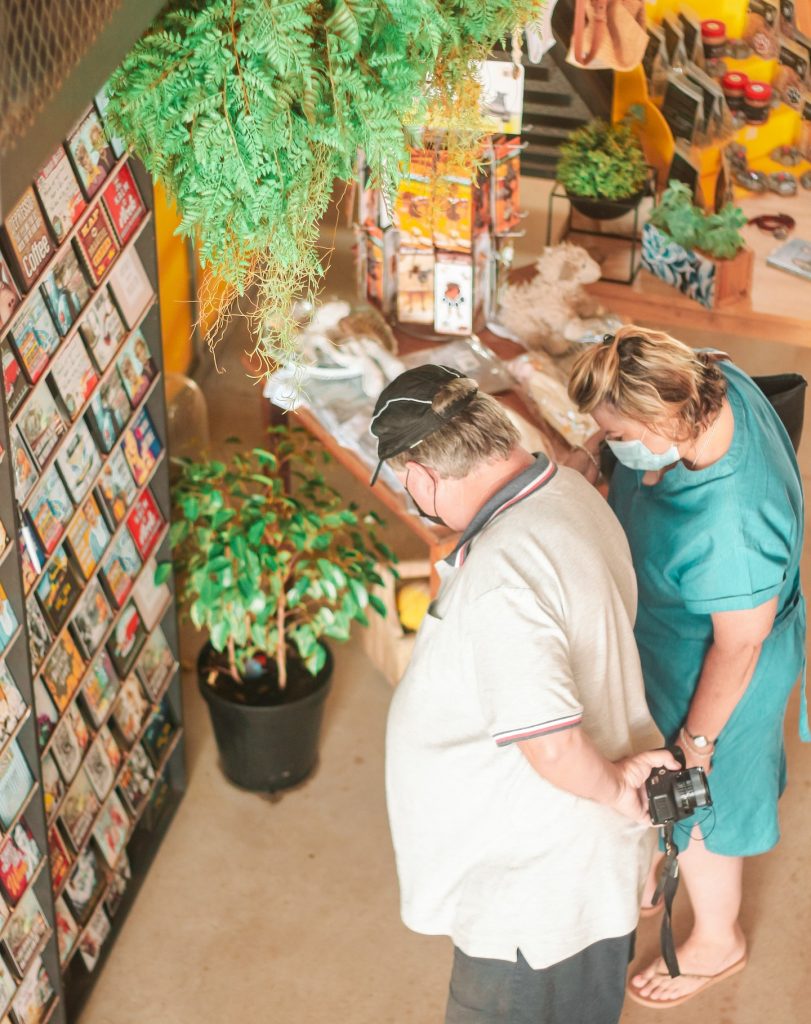
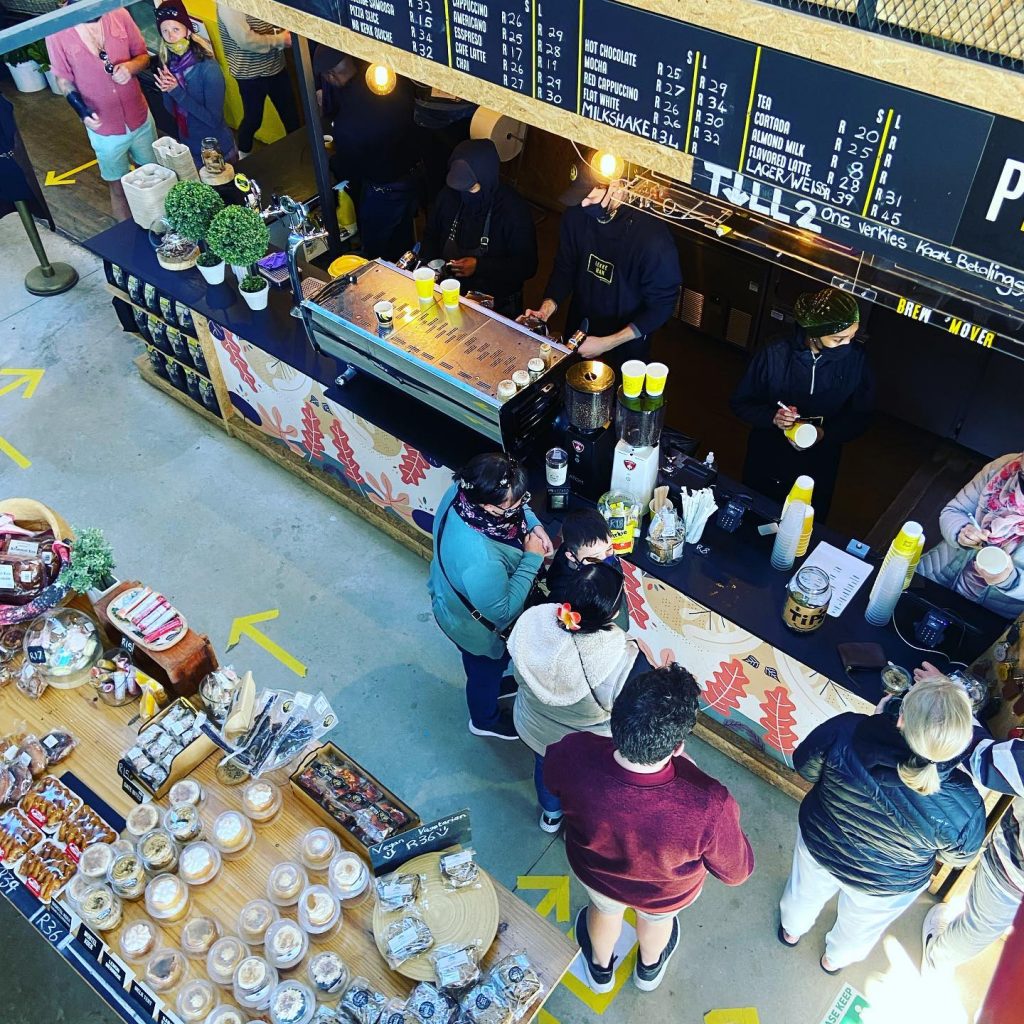
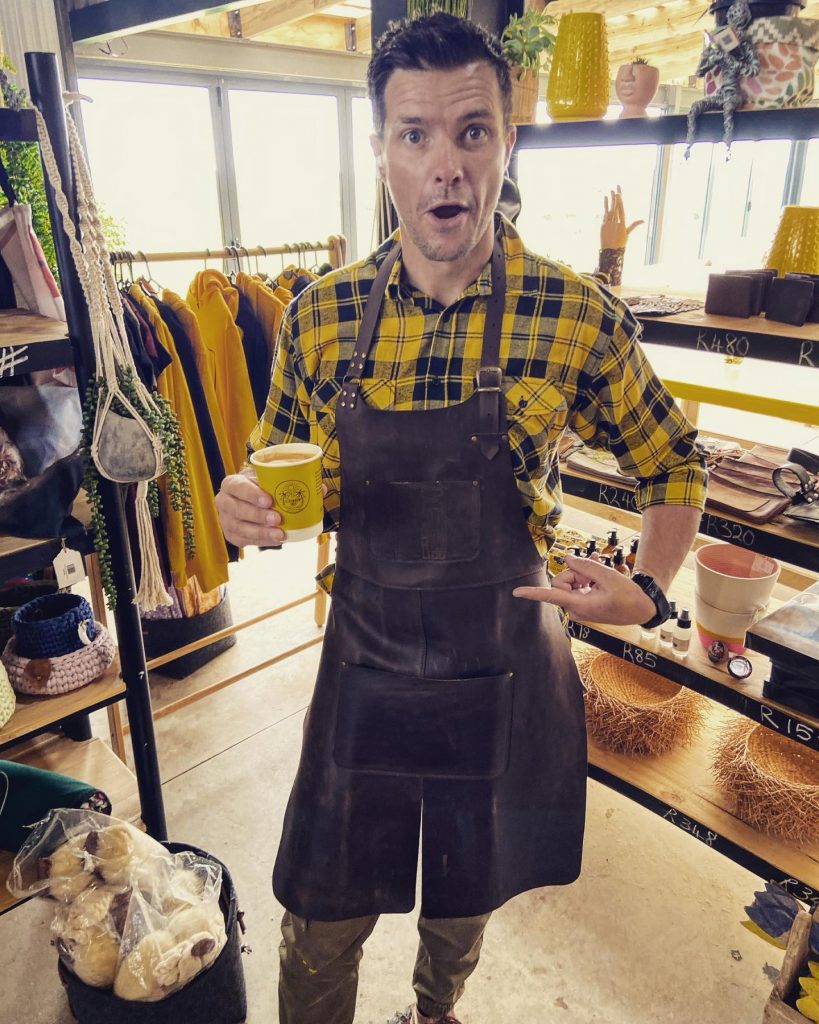
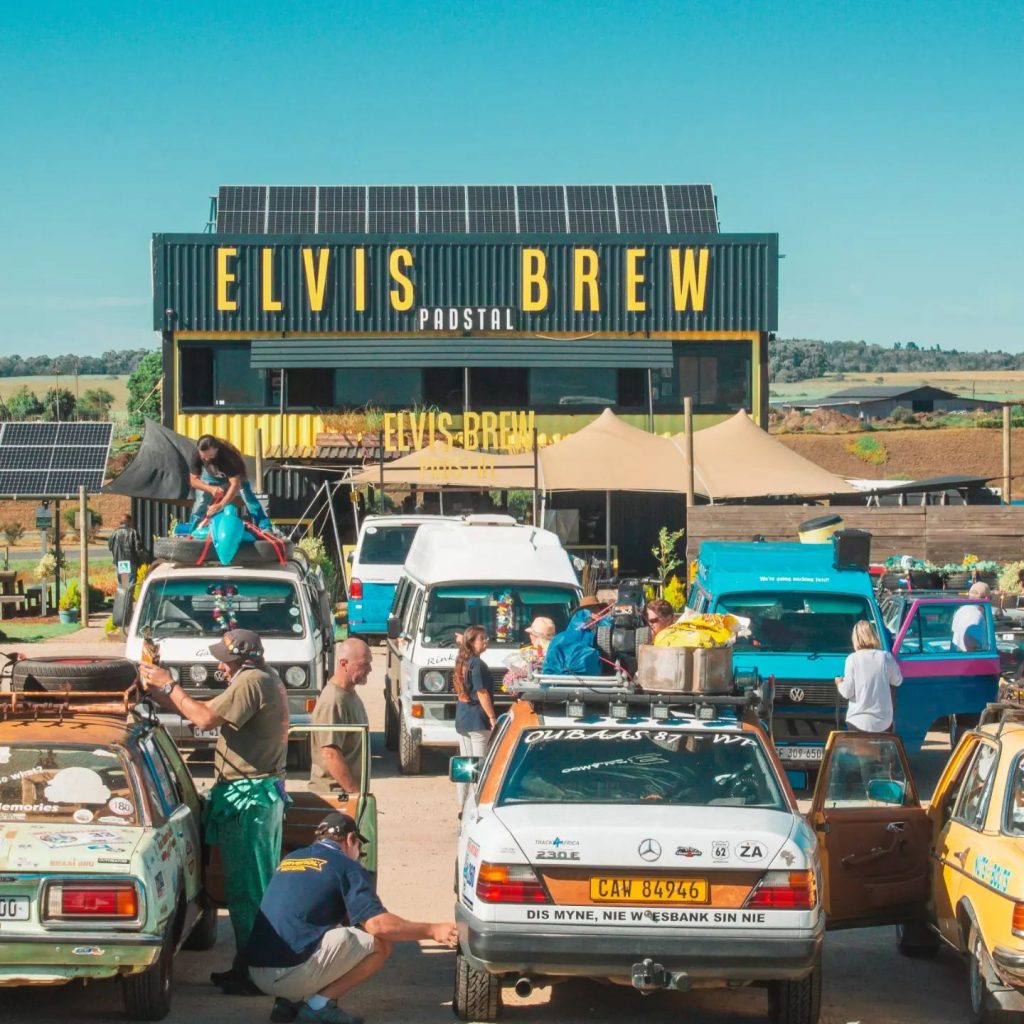
During lockdown, Idols star, Elvis Blue opened up a small padstal in George aptly named Elvis Brew. Staring off in a small container next to Bargain Nursery across from the George Airport runway, this establishment has grown in size and popularity.

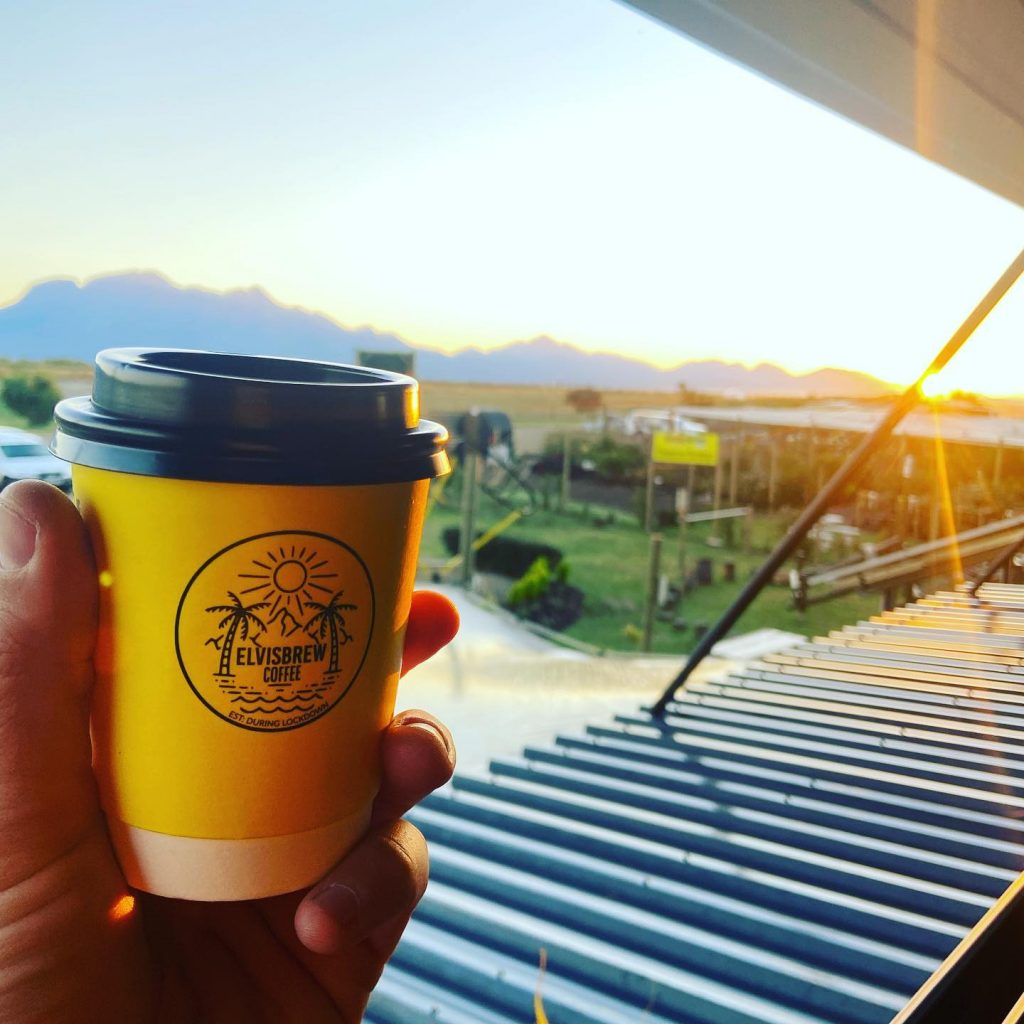
The self-help Padstal boats views of the Outeniqua Mountains and the airport runway and is the perfect place to view aircraft while you indulge in an Elvis Brew cup of coffee or enjoy a lekker craft beer and a bite to eat.

Elvis Blue, (Jan Adriaan Hoogendyk) has always had a passion for watching aircraft as he spent many a day with his father in Johannesburg watching the planes come and go.

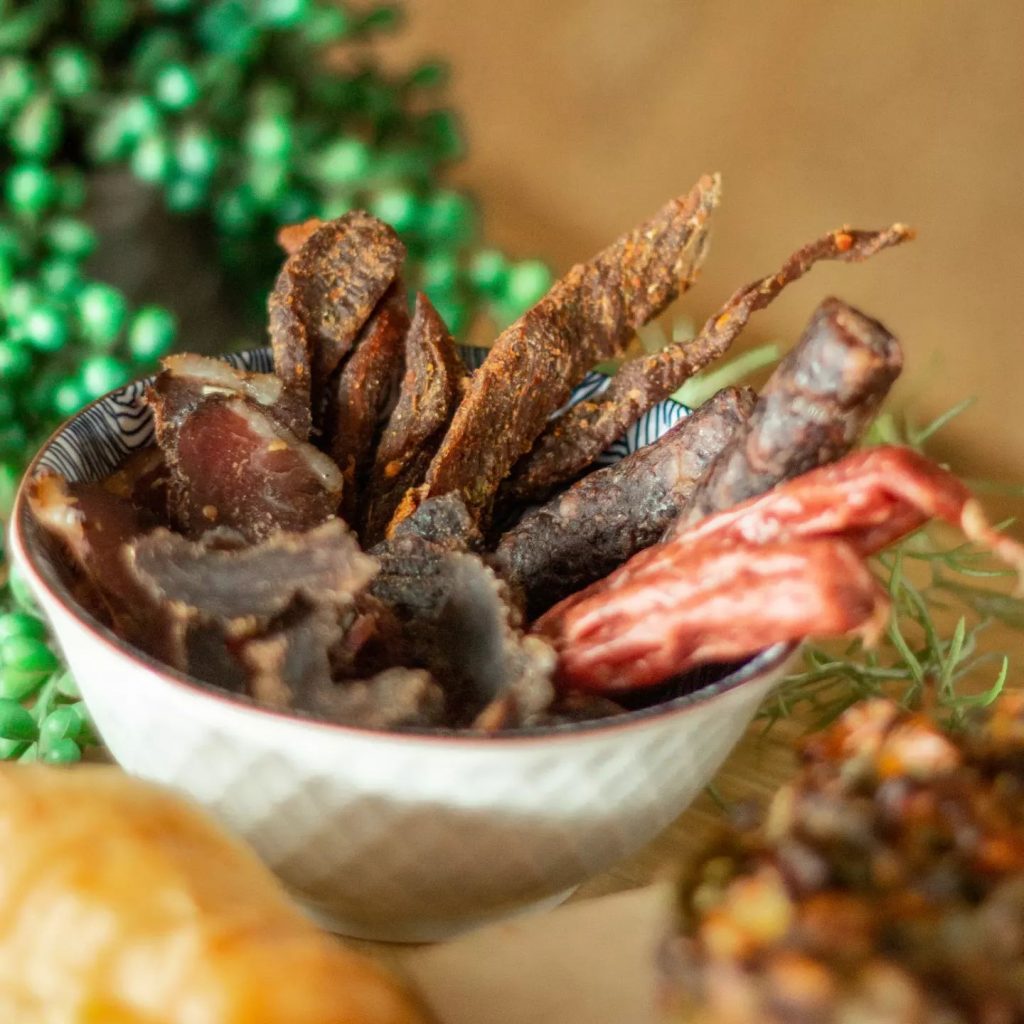
Elvis Brew products and merchandise are specially designed to bring out South African culture as well as providing a lekker vibe, with a wide selection of drinks, delicious foods and snacks.

Gee jou lyf n lekker tyd!

Elvis Blue himself performs at the padstal on occassion.

Visit the FB page for more info Elvis Brew Co. George

Find out more at: https://bit.ly/3xJlZ49

Follow South Africans UK on Facebook and Instagram.

Join the South African UK map and subscribe to our newsletter.